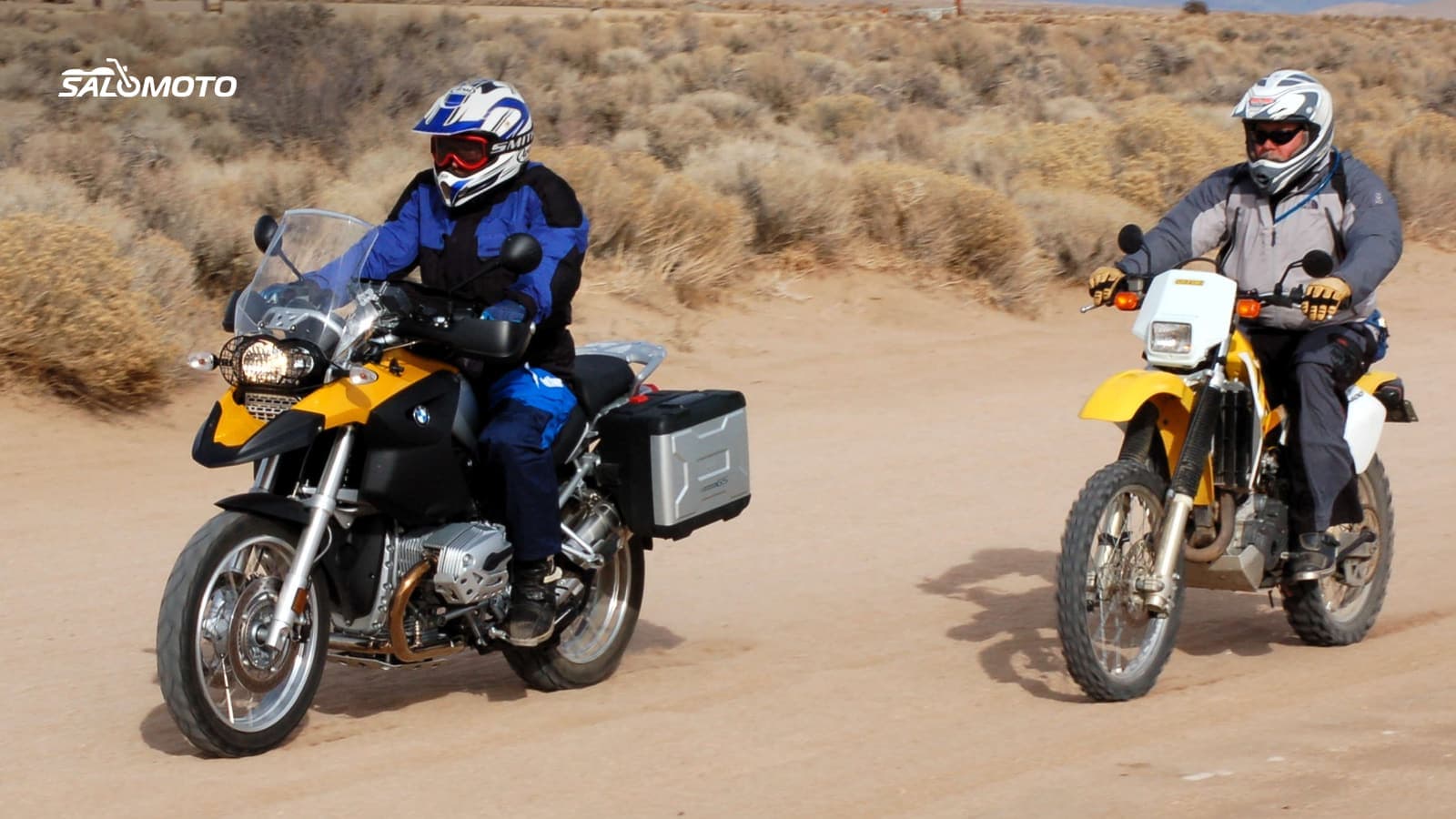
Start with an honest question: how much adventure will you ride?
Adventure bikes are sold with desert tracks and river crossings. Most of them spend their lives on two-lane highways, mountain passes and the interstate to the trailhead, with the odd gravel road to a campsite. That isn't a knock on them. It's exactly what they're good at: an upright seat, long suspension travel for broken pavement, room for luggage and real wind protection.
So look at your last few trips, or the trip you're dreaming about, and roughly split the miles:
- Nearly all pavement, gravel only as an exception: comfort, wind protection and range matter more than off-road ability.
- Regular graded dirt and gravel roads, but no trails: weight and tire choice start to matter.
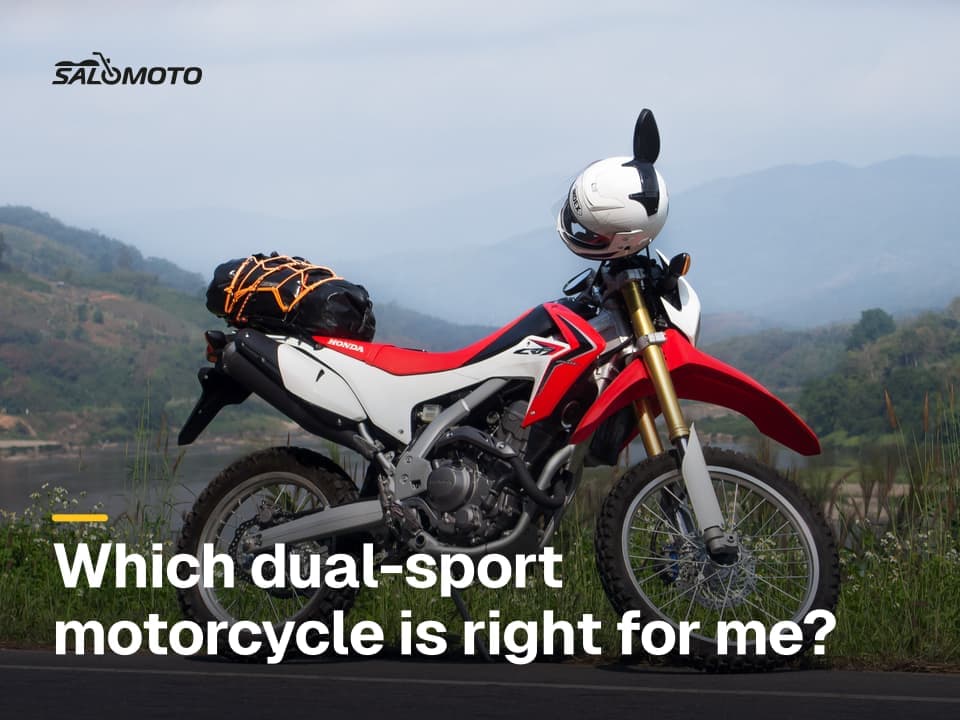
- Two-track, mud, steep rocky climbs: a lighter dual-sport will serve you better; see which dual-sport is right for you.
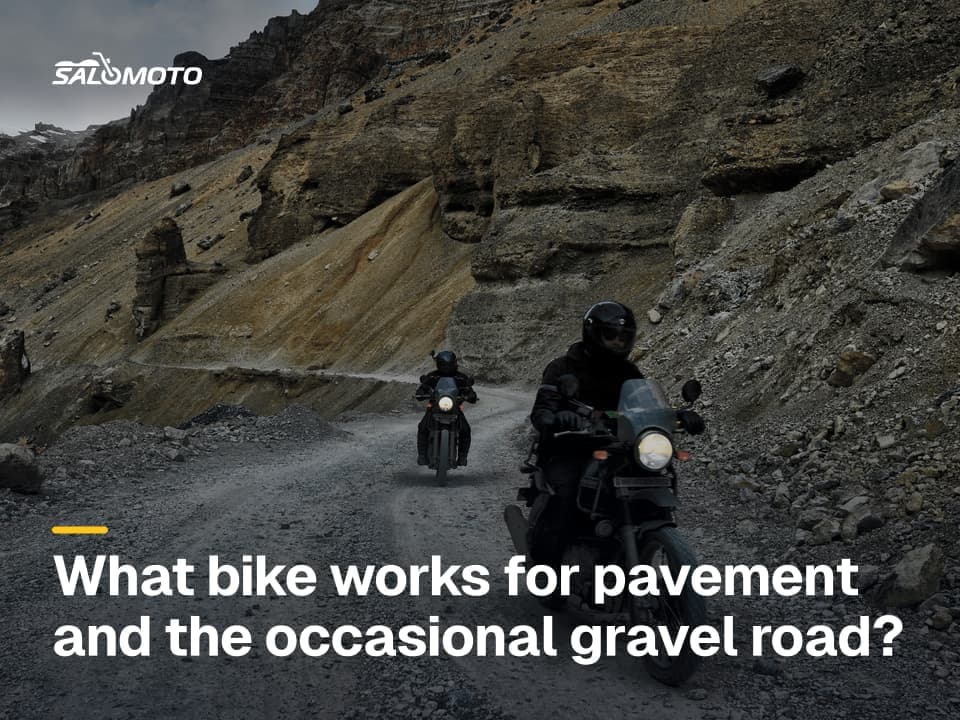
If you're not yet sure you need an adventure bike at all, rather than a scrambler or a crossover, start with a motorcycle for pavement and gravel.
Middleweight or big ADV?
| What you'll notice | Middleweight ADV | Big ADV |
|---|---|---|
| Weight at a stop | easier to handle, less top-heavy | clearly heavier, especially on a full tank |
| Gravel and dirt | more forgiving of mistakes | capable, but asks for more skill |
| Interstate, luggage | enough for a lot of trips | more reserve, calmer when loaded |
| Two-up | often possible, but tighter | usually more room and payload |
| Electronics | basic to good | often very extensive |
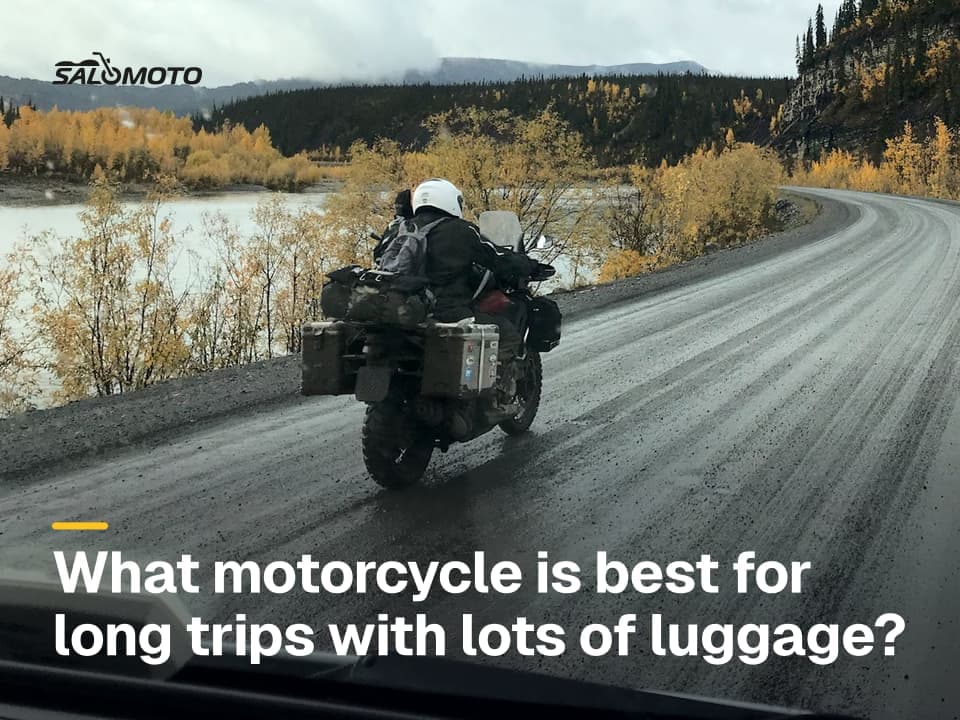
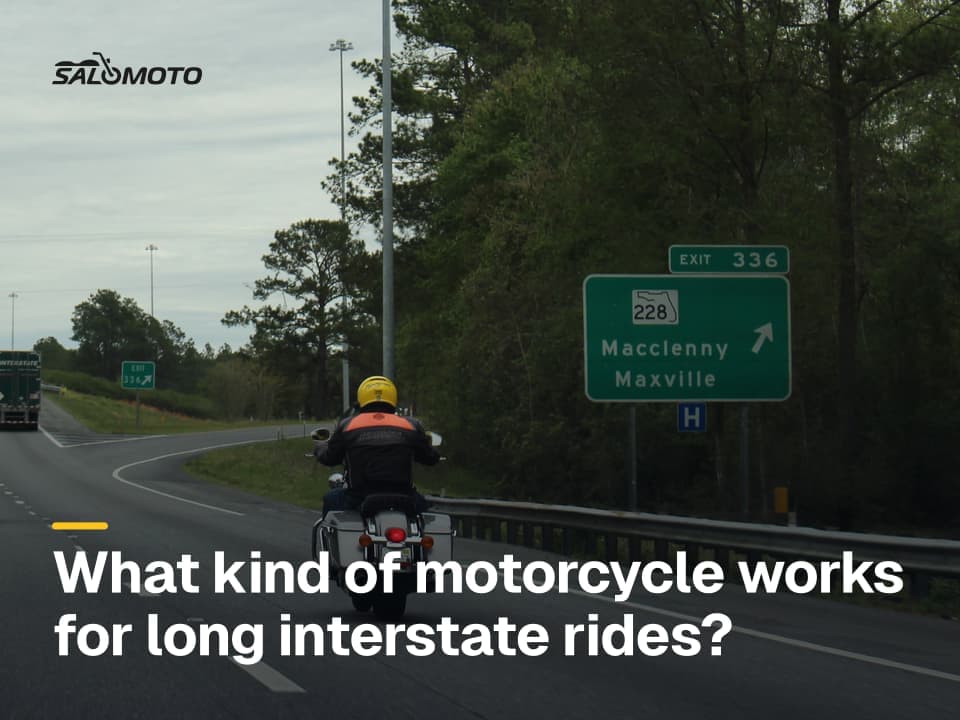
A big ADV shines on long days: a passenger, full cases, hours of interstate. If you mostly ride solo and like mountain roads or dirt, a middleweight is often the happier choice because it's easier to live with every day. For how an adventure bike compares with other types on long highway stretches, see a motorcycle for highway riding; for packing and luggage systems, see motorcycles for travel and luggage.
Weight: at a stop, loaded, and lying on its side
The spec-sheet number is only the start. Be honest about what gets added on a trip: side cases, a top box, crash bars, tools, water, maybe a passenger. An adventure bike also carries its weight fairly high, with a big tank up top. You hardly notice that at speed. You notice it a lot backing out of a sloped parking spot, turning around on a narrow dirt road or stopping in a hairpin.
Three questions help you judge it:
- Can you push the bike backward out of a slightly downhill parking spot with a full tank?
- Can you hold it when one boot lands in a dip or a rut?
- Have you ever picked it up, or would you trust yourself to with some instruction?
If you ride alone in remote country, the answer to the third should be yes. Crash bars make lifting easier and protect the engine and bodywork.
Seat height, wind protection and range
Seat height
Adventure bikes commonly have seats around 33 inches or more; check the spec sheet and, better, sit on the bike. Many models have an adjustable seat, and lower seats or factory-lowered versions are often available. Lowering a bike afterward costs suspension travel and ground clearance. If reach is a real problem, read motorcycles for short riders; very tall riders will find their own criteria in motorcycles for tall riders.
Wind protection
A taller windscreen isn't automatically better. If it doesn't suit your height, the airflow hits right at your helmet and shakes your head around; buffeting is a common sign the screen is too short. Adjustable screens are worth trying on the test ride at both back-road and highway speeds.
Range
Think in miles between gas stops, not tank size. Luggage, headwinds and higher speeds cut range noticeably. If you're heading into the empty stretches of the West or onto long forest-service roads, keep a reserve and plan your fuel stops before you leave.
19 or 21 inches, electronics and tires
The front wheel tells you what an adventure bike was designed for. A 21-inch front rolls over rocks and ruts more easily, opens up a wider choice of knobby tires and feels calmer on loose surfaces. On pavement it steers a little slower, and it often comes with longer suspension and therefore a taller seat. A 19-inch front is more road-focused, turns in more eagerly and handles graded gravel roads fine. For touring with occasional gravel, a 19 is enough for most riders.
On the electronics side, cornering ABS and lean-sensitive traction control are the biggest gains for road riders. Riding modes adjust throttle response and the rider aids for rain or dirt, and some models let you switch off rear ABS for loose surfaces; the owner's manual tells you. For travel, make sure rear preload can be adjusted for luggage and a passenger, electronically or with a knob. Cruise control is a welcome extra on long highway days.
Tires are the most underrated choice. A road-biased tire is usually better on pavement and dry gravel than an aggressive knobby, which gives up grip on wet roads. Off the pavement, ride only where it's legal; see where you can ride off-road. A one-day off-road course shows you what your bike can do on dirt and what you still need to practice.
What to check on an adventure-bike test ride
- Get on with a full tank and hold the bike on slightly sloped ground
- Try the seat in both positions if it adjusts
- Stand on the pegs: do the bar height and pegs work without hunching over?
- Test the windscreen at back-road and highway speeds, in more than one position if possible
- Make a tight U-turn, ideally on gravel or loose ground too
- Ask how preload and riding modes are adjusted
The general sit-on and test-ride checklist is in our guide to your first motorcycle.