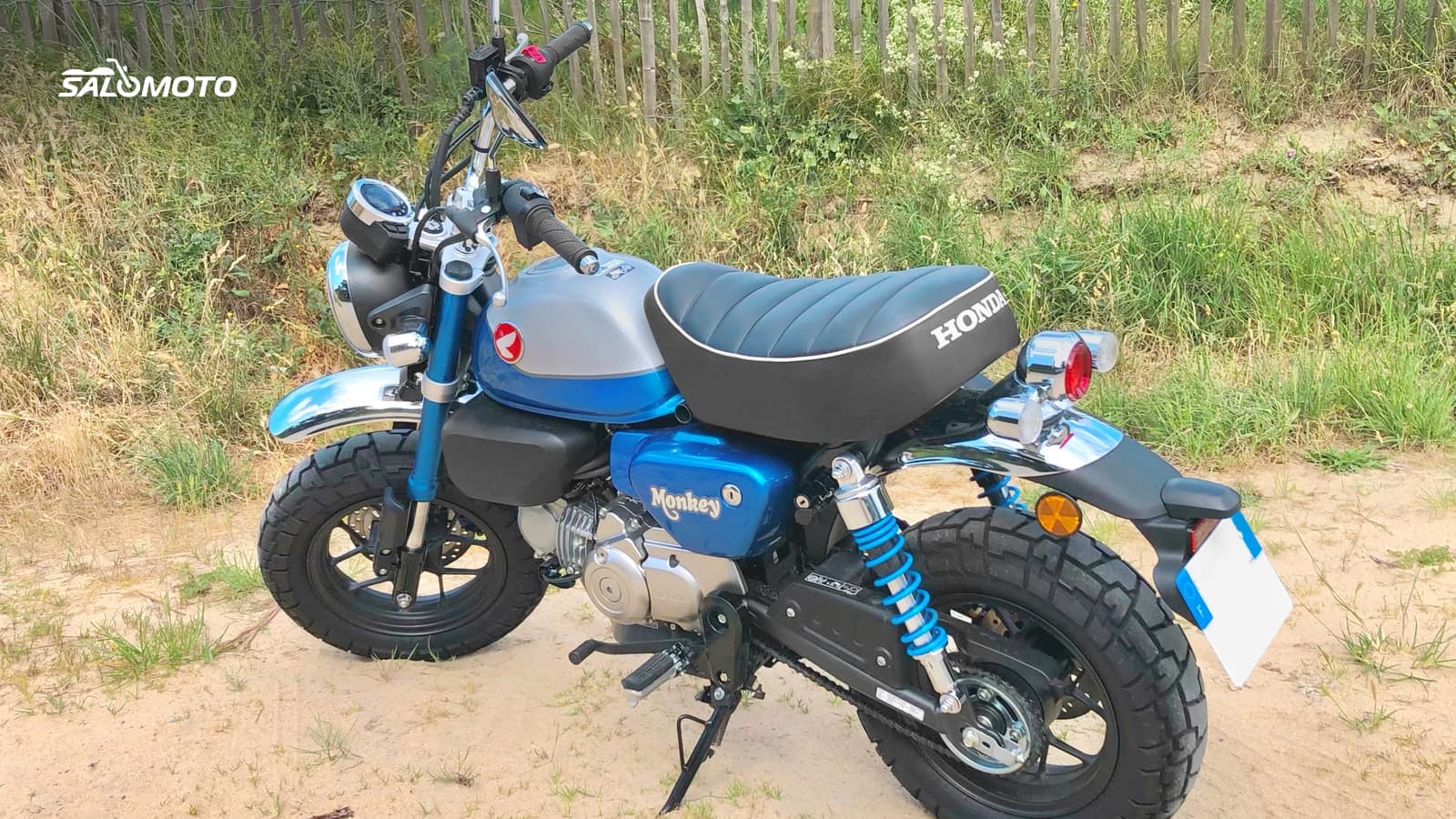
Why the spec-sheet seat height misleads
Seat height is a single number, measured on the bike without you on it. How far your feet actually reach depends on several things at once:
| Factor | What it does | How to check |
|---|---|---|
| Inseam | matters more than your overall height | measure standing, in socks |
| Seat width | a wide seat spreads your legs and lengthens the reach | sit forward: does the seat narrow there? |
| Suspension sag | the bike sinks under your weight, soft suspension more so | sit on it first, then judge your footing |
| Pegs and engine | footpegs, engine covers or the exhaust can sit right in the way | put a foot down, then back on the peg |
That's why two riders of the same height reach the ground differently on the same bike, and why a bike with a taller listed seat can feel friendlier than a lower one with a wide, flat seat. Use the number to narrow your list; decide only after you've sat on it.
Weight and center of gravity count just as much
With a shorter inseam you rarely hold a bike straight up over both feet. Usually it leans a little onto one leg. The heavier it is and the higher that weight sits, the sooner you reach the point where you can't hold it anymore. A light bike with a slightly taller seat is often more relaxed than a heavy one that sits lower but pulls hard to the side every time it leans. A full tank mounted high in the frame makes that noticeably worse.
Fit matters up top, too. At full lock, can you reach the outside grip without twisting your upper body? Can the clutch and brake levers be adjusted for your hand size? If it's low-speed riding in general that makes you uneasy, not just your footing, read motorcycles that build confidence.
Making a bike fit: seat, suspension, lowering
From the smallest change to the biggest:
- A lower or narrower seat: many models offer one from the factory or the aftermarket, or an upholstery shop can reshape yours. The catch: less padding on long rides, and since the pegs stay put, your knees bend more.
- Less spring preload: the bike sits a bit lower under you. Stay within the range the manufacturer specifies, or the suspension bottoms out sooner.
- Factory-lowered versions: some models come with lower suspension, so the manufacturer has done the setup.
- A lowering kit: at the rear usually new linkage pieces or dog bones at the shock, at the front the fork tubes slid up in the triple clamps. Both ends should match, or the steering changes.
Lowering has side effects:
- less cornering clearance: pegs, kickstand or exhaust touch down sooner
- the suspension bottoms out more easily over potholes or with luggage or a passenger
- the bike stands more upright on its kickstand and tips over more easily; the stand often needs adjusting
Boots and technique: the underrated half
A slightly taller, firm sole often gives you exactly the bit of reach you're missing, so always sit on a bike in the boots you'll ride in. The rest is technique, and you can practice it:
- One foot is enough: as you stop, shift slightly to one side and plant one foot firmly, usually the left, keeping your right foot on the rear brake.
- Plan your stops: look early at where your foot will land. Road edges slope away, and manhole covers, loose gravel and ruts make your footing uncertain. Stop where the ground under your planted foot is level or higher.
- Park with an exit plan: leave the bike so you can ride out forward. Pushing backward uphill is the hardest move on short legs.
- Walk it, don't paddle it: pushing the bike from beside it, leaning it slightly against your hip, is often safer than tiptoeing it around from the seat.
Slow riding, stopping and U-turns are best practiced in an empty parking lot or on a rider course.
Kinds of bikes that often suit
| Type | Often works because | Watch for |
|---|---|---|
| Cruiser | low seat, low center of gravity | often heavy, feet-forward controls |
| Standard, modern classic | upright, often a narrow seat | ranges from light to heavy |
| Small-displacement bike | light, often low | limited on highways and long trips |
| Scooter | step-through, easy handling | wide seat and floorboard lengthen the reach |
| Dual-sport, supermoto | light and tough | seats are usually tall |
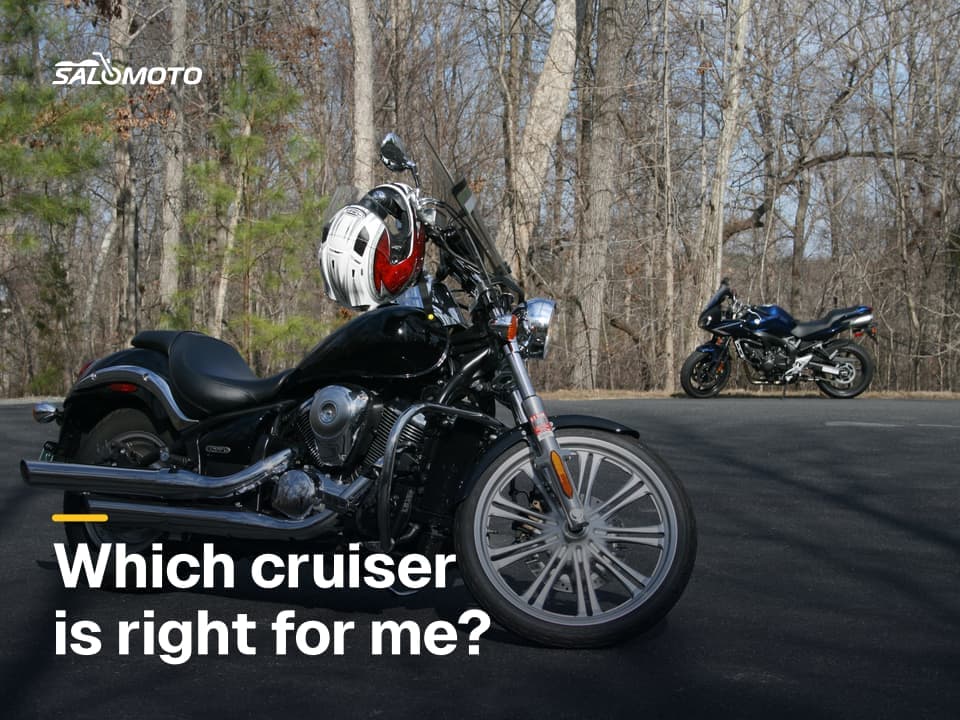
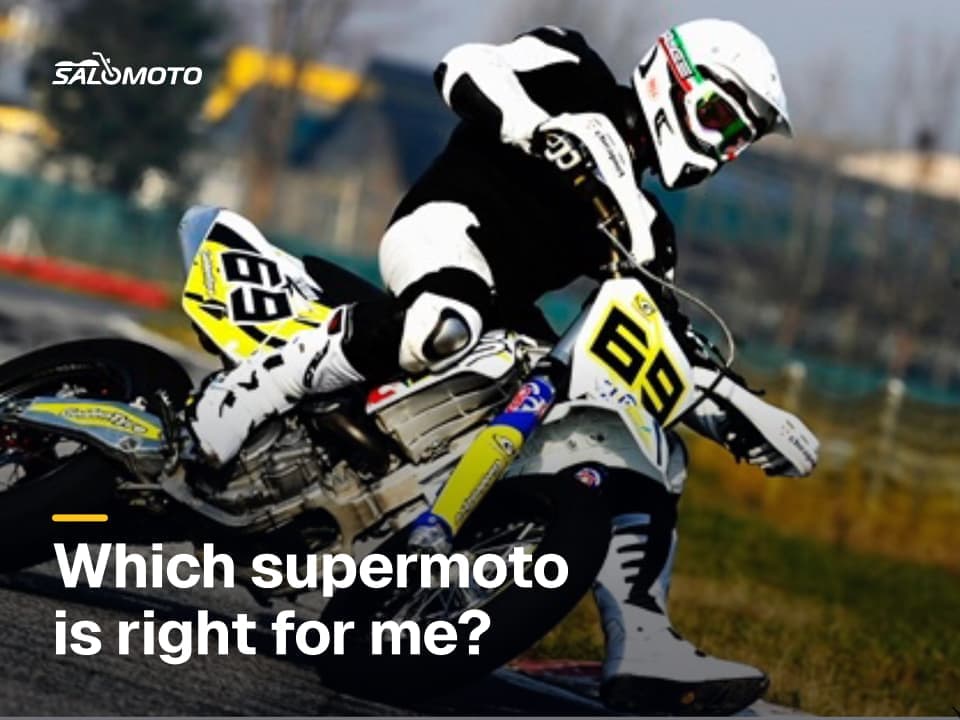
For what weight and controls mean on a cruiser, see choosing a cruiser. If a supermoto still tempts you despite the tall seat, that guide covers the class's specific trade-offs. When you sit on a bike, these checks matter most for you:
- sit on it in your riding boots and let the suspension settle
- lift the bike off the kickstand and set it back down
- stop on a gentle slope and stay put
- slide forward: does the seat get narrow enough?
- put a foot down: does your leg hit a peg, the engine or the exhaust?
The general test-ride checklist is in your first motorcycle. Riders at the other end of the scale will find their own criteria in motorcycles for tall riders.