Start with the rider, not the spec sheet
A first bike is judged differently from every bike after it. Top speed and peak horsepower barely matter in your first season. What matters is whether you're in control at walking pace: pulling out of a parking space, making a U-turn, stopping at the top of a sloped driveway. That's where new riders get into trouble, and where the right bike makes the biggest difference.
Weigh your priorities roughly in this order:
- License: It sets the frame before anything else; start with what you can ride on which license.
- Body: Height, inseam, strength, and how the bike's weight feels to you.
- Roads: City streets, back roads, highway commutes, the occasional dirt road?
- Confidence: How relaxed are you on two wheels right now, honestly?
- Budget and style: Both count, but only once the first four line up.
For budget, running costs and buying used, see our page for new riders. This guide is about the question that comes first: what kind of motorcycle.
Weight, seat height and power: what you'll actually feel
Weight
A bike you can push across a garage, back out of a sloped parking spot and hold up at a gas pump is a bike you'll ride relaxed. The number on the spec sheet is only part of it. Where the weight sits matters too: a tall center of gravity and a big full tank feel heavier at a stop than the same weight carried low.
Seat height
Seat height alone tells you little. A narrow seat makes a tall bike easier to reach the ground on, a wide seat makes it harder, and soft suspension sinks as you sit down. You don't need both feet flat, but you do need to hold the bike steady when the road slopes away under one boot.
Power delivery
How the power arrives matters more than how much there is. An engine that pulls evenly from low revs and responds gently to the throttle forgives a clumsy clutch hand. One that wakes up suddenly near the top of the rev range asks for more finesse. How big an engine makes sense for a new rider is its own question, covered in what size motorcycle to start on. Whatever you pick, look for ABS on the spec sheet.
Which kind of bike works as a first bike?
| Type | Why it works | Watch for |
|---|---|---|
| Standard / naked | upright, easy to see over, usually nimble | little wind protection on the highway |
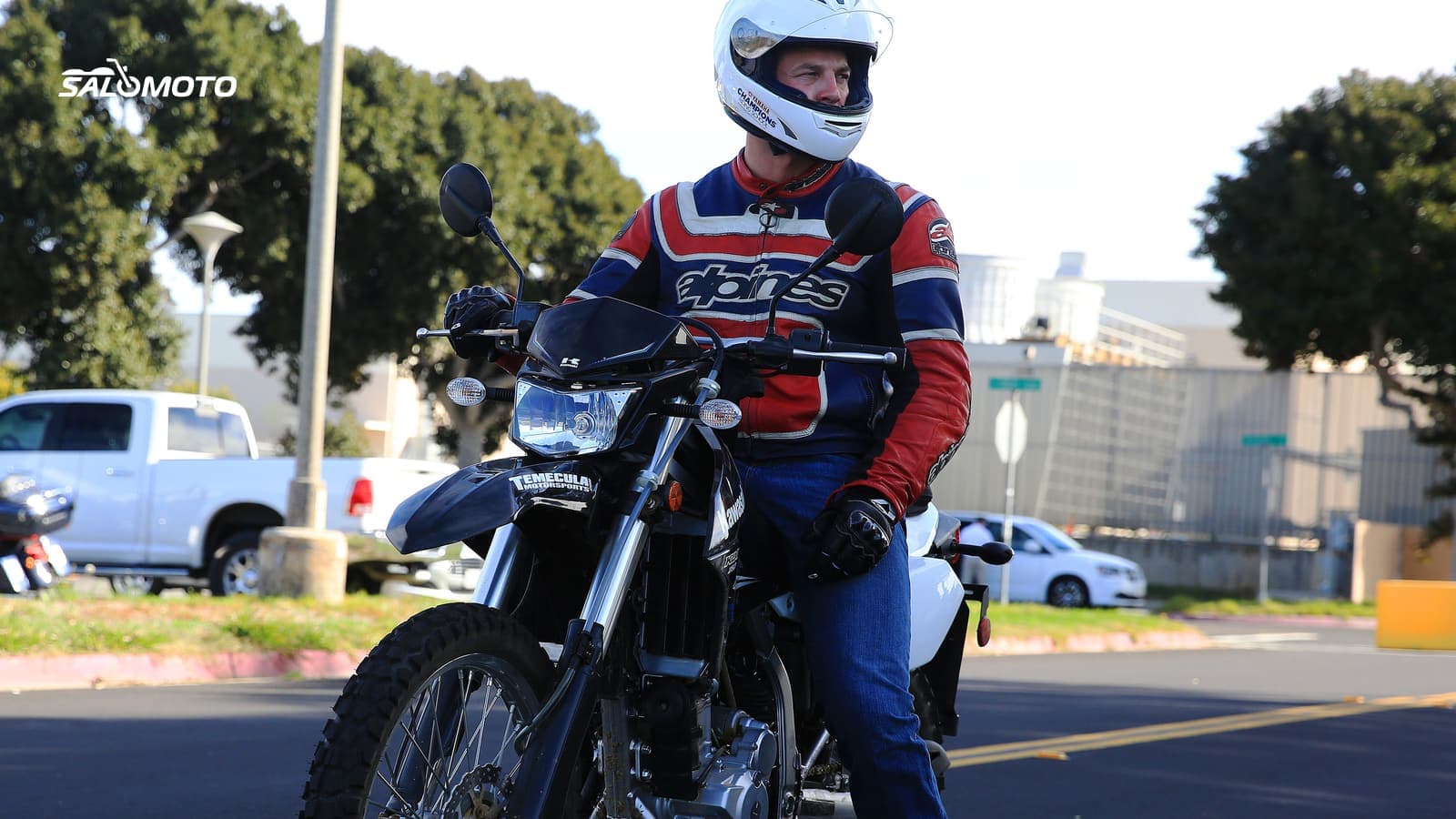
| Dual-sport | upright, tough, shrugs off tip-overs | seats are often tall |
| Adventure bike | comfortable, roomy, good for travel | often tall and heavy for a beginner |
| Small sportbike | precise, sporty look | leaned-forward position, costly fairings if dropped |
| Cruiser | low seat, relaxed engine | often heavy, feet-forward controls, limited lean angle |
| Modern classic | upright, simple, lots of choice | ranges from light to heavy |
| Scooter | easy, practical, no shifting | limited on highways and long trips |
For a lot of new riders, a standard or a lighter dual-sport is the least complicated start: upright, predictable, and easy to handle at low speed. That doesn't make a cruiser or a small sportbike wrong. It just means you accept the trade-offs in the right-hand column on purpose. If you're weighing a small motorcycle against a scooter for getting around town, see 125cc motorcycle vs. scooter.
A good first step before buying anything is a basic rider course. Many of them, New Jersey's state program among them, provide a training motorcycle, so you learn on a small, upright bike and come away knowing what that feels like.
The classic mistake: buying for the rider you'll be in three years
Many new riders buy the motorcycle they picture themselves on once they're experienced: bigger, heavier, faster, "so I won't outgrow it." The catch is that you learn the most in your first months, and that's exactly when an oversized bike holds you back. If you're nervous about dropping it, you practice fewer U-turns, avoid tight parking lots and leave it in the garage on days you don't feel sure.
Other common traps:
- buying on looks or specs without ever sitting on the bike
- taking advice from a friend with different legs and ten years of riding
- spending everything on the bike and nothing on gear or training
- choosing a bike where a simple tip-over at a stop means an expensive repair
A first bike can be a stepping stone; moving on after a season or two is normal, not a failure. If you still feel shaky after your course, read motorcycles that build confidence.
Sit-on and test-ride checklist
- Get on, fold the kickstand, hold the bike upright: no wobbling, no tiptoe balancing
- Turn the bars to full lock: can you reach both grips without stretching?
- Walk the bike a few yards forward and push it backward
- Check the clutch and brake levers: do they suit your hands, are they adjustable?
- Ride slowly, make a U-turn, stop: is the throttle response predictable?
- Check the mirrors: do you see traffic or just your elbows?
- Sit on it wearing your riding boots, since soles change your reach
- Afterward, ask yourself honestly: were you relaxed or tense?
If a test ride isn't on offer, sitting on the bike and walking it around is the minimum. Once it's yours, a few hours of further training on your own motorcycle helps you learn it faster.