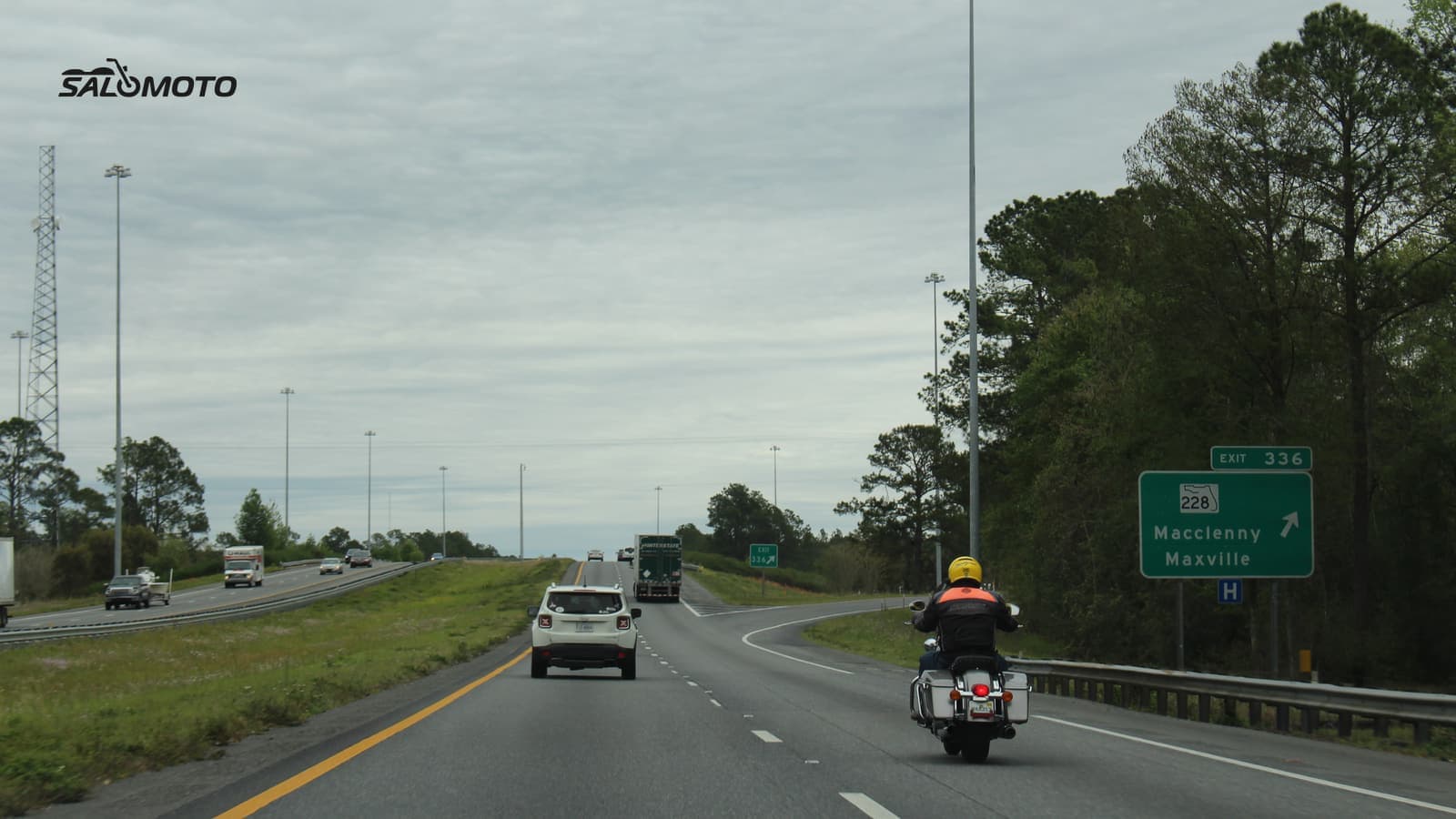
What actually wears you out on the interstate
On a back road you're always moving: leaning, braking, shifting, standing on the pegs for a moment. On the interstate you sit almost still in the same blast of air for an hour or more. Different things tire you out there, and a bike you love on your Sunday loop can turn into a chore on a long highway day.
Rank what you need roughly like this:
- Wind and noise: how much air reaches you, and above all where it hits
- Seating: knee angle, seat, load on your wrists and neck
- Engine: how relaxed it feels at your cruising pace
- Range and comfort features: tank size, cruise control, heated grips
- Stability: weight, crosswinds, turbulence from trucks
Whether the answer is a sport tourer is a question for choosing a sport-touring motorcycle. This page covers the step before: what a bike needs for a lot of highway miles.
Wind, buffeting and noise
How much protection you need
Without a fairing, the wind hits your chest and helmet head-on. You brace against it with your arms, shoulders and neck, and after an hour that's real work. A half or full fairing pushes the air around your upper body and also keeps windchill off you, which matters on cold mornings as much as in summer.
Clean air, not buffeting
A taller windshield isn't automatically quieter. What counts is where the airflow breaks. If its edge lands right at your visor, your head gets shaken around and it's louder than open wind. It gets calm when the air either clears your helmet or meets it evenly. Your torso length, seat height and helmet shape change that a lot, so an adjustable windshield is worth having, ideally one you can adjust on the move.
Noise
Even behind a good windshield, wind roars inside your helmet. That constant noise tires you more than you'd expect over a long day. A well-fitting, quiet helmet and hearing protection made for riding are standard kit for many high-mileage riders.
Seating and engine: what counts after hours
Knee angle: High, rearset pegs fold your knees up. On a back road you barely notice because you move around. On the highway, your knees and hips start talking after a while.
Seat: Plush foam feels great in the showroom; after two hours it often presses on one spot. A firm, wide seat that lets you shift around now and then usually works better.
Wrists and neck: At highway speed the wind partly holds up a forward-leaning torso, which is why a sporty position can feel easier on the interstate than in traffic. Sit bolt upright with no protection and the wind pushes you back, so you hang on the bars. Position and wind protection have to work together.
Vibration: If your hands and feet tingle at steady rpm or the mirrors blur, it won't get better on a long ride.
Engine: Relaxed means it runs in a smooth, unstressed part of its rev range at your cruising pace and still has enough in reserve to pass without a downshift. Small engines work closer to their limit, and luggage or a headwind makes that worse. You don't need a huge engine, just one that doesn't sound like it's working hard all day.
Range, cruise control and crosswinds
Range: It comes from tank size and fuel use, and fuel use climbs at sustained higher speeds because air resistance grows with speed. Look at range in your own riding, not the best brochure number. In parts of the rural West, gas stations can be far apart, so a small tank can force you to plan every stop.
Comfort features: Cruise control takes the strain off your throttle hand and lets you change your grip; heated grips keep your hands loose. Check whether they're standard or part of a package; not every model can be retrofitted. No feature replaces regular breaks.
Crosswinds: A heavy bike gets pushed around less by gusts, but big fairings, saddlebags and a tall top case give the wind more surface. Gusts come on bridges, in open country and around semi trucks.
Which type of bike suits a lot of highway riding?
| Type | On the highway | Watch for |
|---|---|---|
| Naked bike | light, direct | full wind blast, neck strain, noise |
| Naked with windshield | noticeably easier | buffeting if the height is wrong |
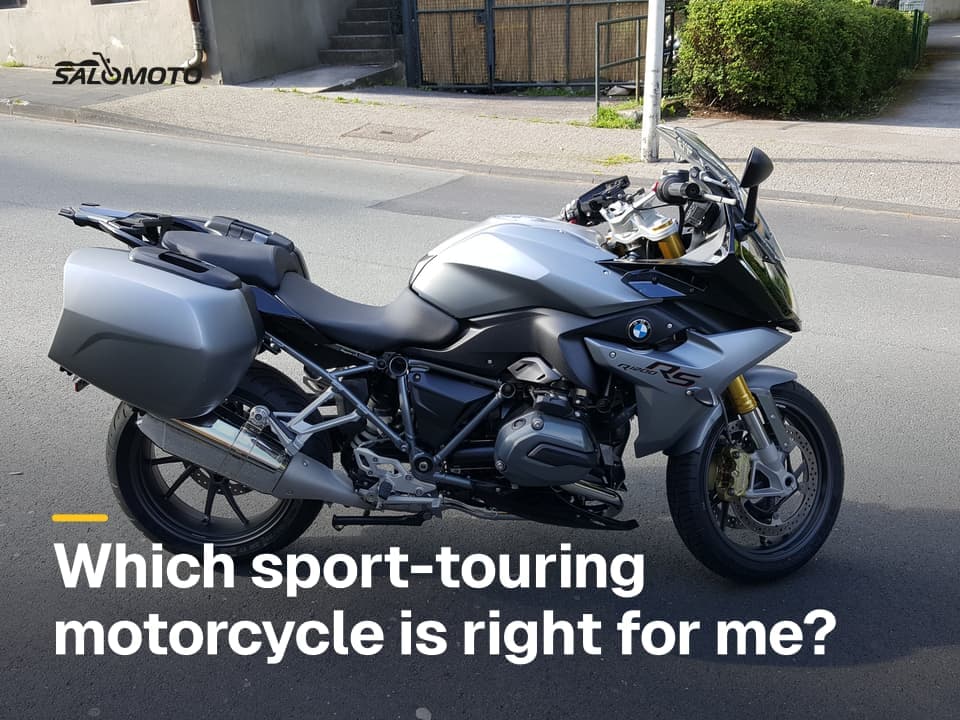
| Sport tourer | good protection, stable, big tank | weight, sporty position on some |
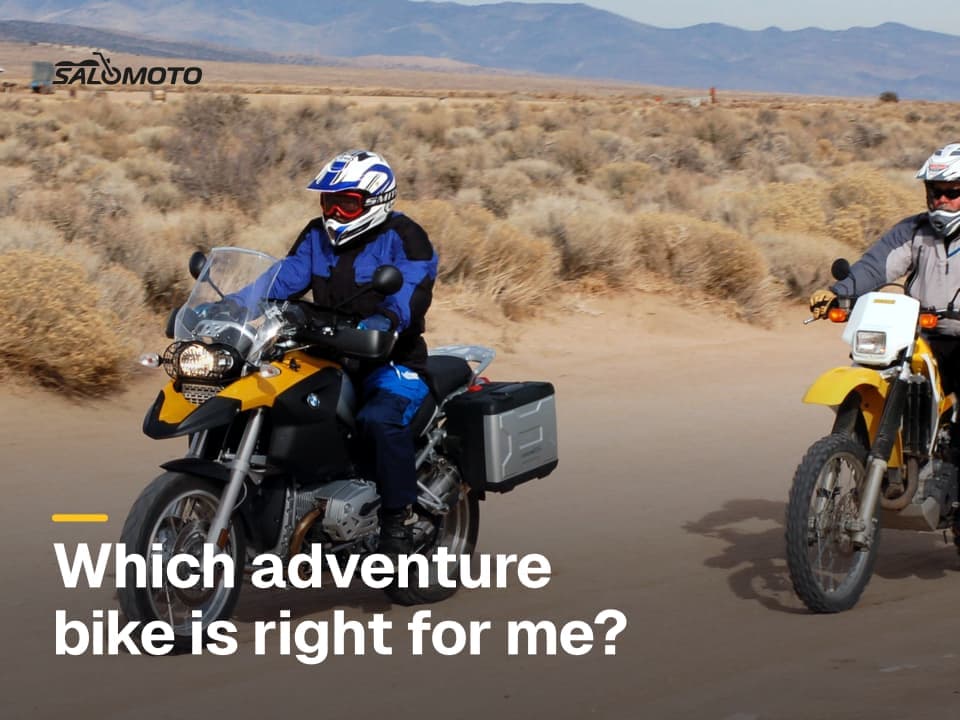
| Adventure bike | upright, often long range | tall seat, test the windshield |
| Cruiser | relaxed engine, low seat | feet forward, lots of wind without a screen |
| Full-dress tourer | maximum protection and comfort | very heavy to maneuver |
| Small bike (125–300cc) | possible where allowed | little in reserve on grades and in wind |
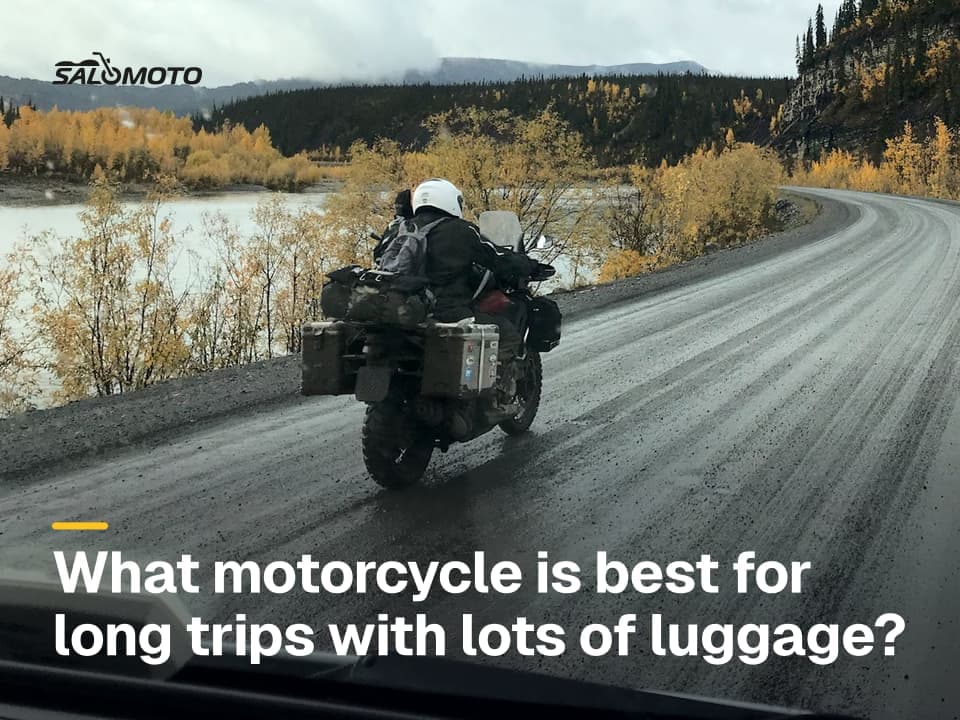
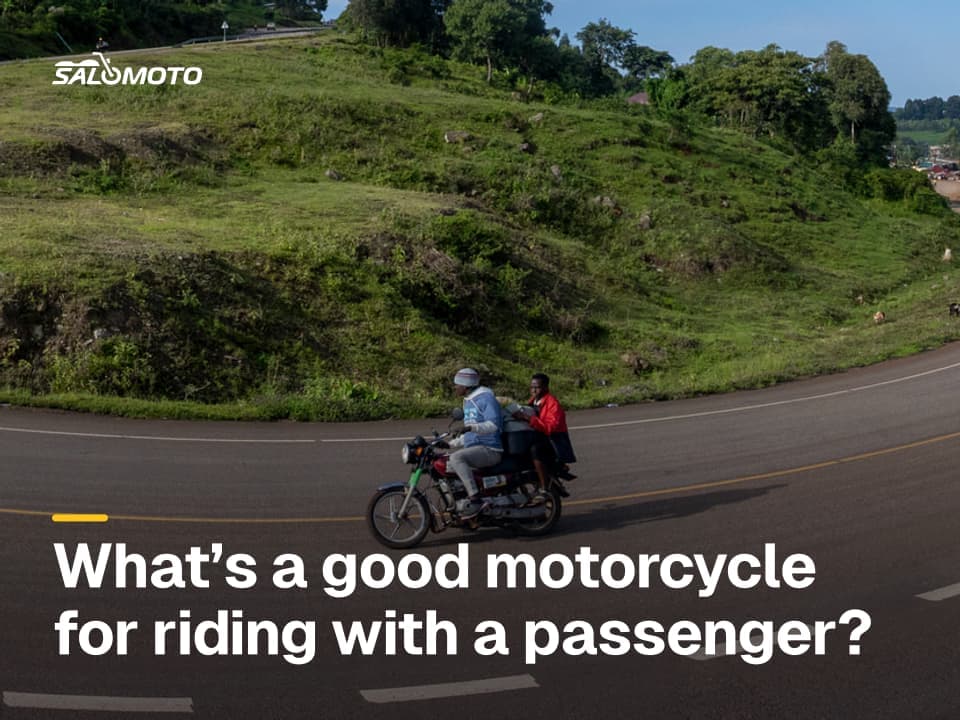
If your highway riding is occasional, a naked bike with a windshield often does the job; see choosing a naked bike. For gravel and rough roads along the way, look at an adventure bike. A passenger sits higher in the wind, covered in motorcycles for two-up riding, and bags and long trips are in motorcycles for travel and luggage.
Freeway rules and what to check on a test ride
The general checklist is in our guide to the first motorcycle. For lots of highway riding, add:
- Include a real stretch of highway, not just a lap around town
- At your usual cruising speed: is your helmet steady, or is it shaking?
- Try every windshield position, wearing your own helmet
- Vibration in your hands, feet and mirrors at steady rpm
- After half an hour: pressure on your seat, knees or wrists?
- Work the cruise control and switches with gloves on
- Check the range readout and fuel use on the dash
Legal information on this page refers to the United States, where rules vary by state.