Point-to-point, home base or a mix?
Before you plan a single leg, decide the shape of the trip. It sets how often you pack, how flexible you are and how much variety you get.
| Shape | How it works | Strengths | Weaknesses |
|---|---|---|---|
| Point-to-point | a new bed every night | lots of variety, a real journey | packing daily, little slack |
| Home base | one motel or cabin, day loops | ride unloaded, flexible with weather | less new scenery |
| Mix | legs between two or three bases | variety plus rest days | more planning |
You plan the day loops from a home base like any loop ride. For a first long trip, the mix is often the most relaxed choice, because you get to settle in now and then instead of strapping everything down every morning.
Cutting the days: start short, keep slack
A multi-day trip isn't a string of day rides. Fatigue adds up: day three feels harder than day one at the same mileage, your neck and backside speak up, and concentration fades sooner. How far to ride in a day helps you find a realistic daily distance; over several days, plan below it.
- Day one is short. Packing, getting out the door and getting used to a loaded bike take time and patience.
- Alternate long and short days. After a long transit day, plan a short one with time at the destination.
- The last day has room. The ride home is often the day with the most interstate and the least motivation.
- Call transit legs what they are. Sometimes you just need to cover ground. Then plan it that way on purpose.
Choosing overnight stops
Where a day ends decides your evening and the next morning. A good overnight town has restaurants still open when you roll in, lodging where the bike can park safely and a short way to good roads the next morning. Big cities often make poor overnight stops: the last miles in and the first miles out cost a lot of time and energy in traffic.
Plan to arrive in the late afternoon, not at dusk, when deer and other wildlife are often near the road in rural areas. How to pick the lodging itself and what matters at check-in with a motorcycle is covered in an overnight motorcycle weekend.
Buffer days, daylight and plan B
On trips of a week or more, many riders keep one day with nothing booked. It absorbs a rain day, a breakdown, a tire change or plain exhaustion without pushing every later reservation. If everything goes smoothly, it becomes a rest day.
Daylight is the second limit. In spring and fall the sun sets much earlier than in midsummer, and it gets dark sooner in canyons and valleys. Look up sunset at each overnight stop and plan backward from it. If the trip heads into the mountains, high passes can open late in the season and weather can turn fast; mountain motorcycle trips and planning around weather cover that.
For every leg, know one shortcut you can take if the day falls apart. It doesn't have to be pretty, just dependable.
Living out of your luggage
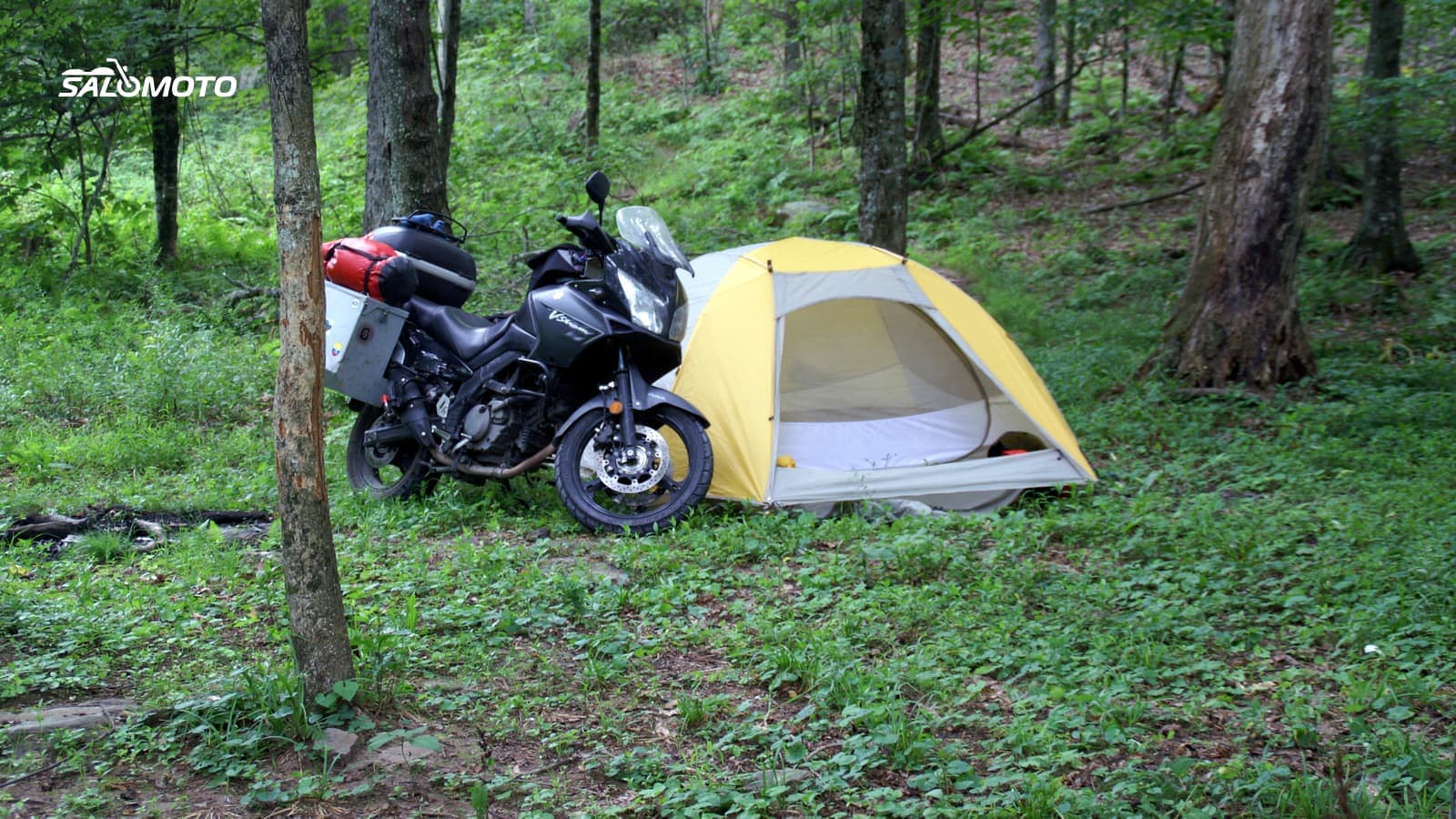
Living out of saddlebags for days is mostly about order. Pack by frequency: one overnight bag you carry into the room by itself; rain gear and gloves within reach; tools and spares at the bottom. Heavy items go low and close to the center of the bike.
Weight changes how your motorcycle behaves: it takes longer to stop, steers more slowly and often calls for higher tire pressure per the owner's manual. How much payload your bike can carry and which bikes suit loaded touring is covered in the Bike Match guide motorcycles for travel and luggage. Two nights in one place don't just halve the packing; they also give you time for laundry.
Break the trip into daily routes
Plan each day as its own route instead of one giant line. Files stay small, changes stay easy and you stay within the limits of many GPS units. Load each day separately, name it with the day and the destination, and carry a short paper list of overnight towns as a backup.
Salomoto today (as of November 2026): The Salomoto route planner only plans routes within Germany, so it can't map a trip at home or across borders. For a trip through Germany, you can plan each leg free with no account, with start, destination and stops, see distance, estimated riding time without breaks and an elevation profile, and download each leg as a GPX track. With a free account you can save each leg as a separate route and share it with your riding partners. Salomoto doesn't show lodging, gas stations, weather or road closures. After each day, you can log the ride by hand in RoadDex; RoadDex doesn't record GPS.