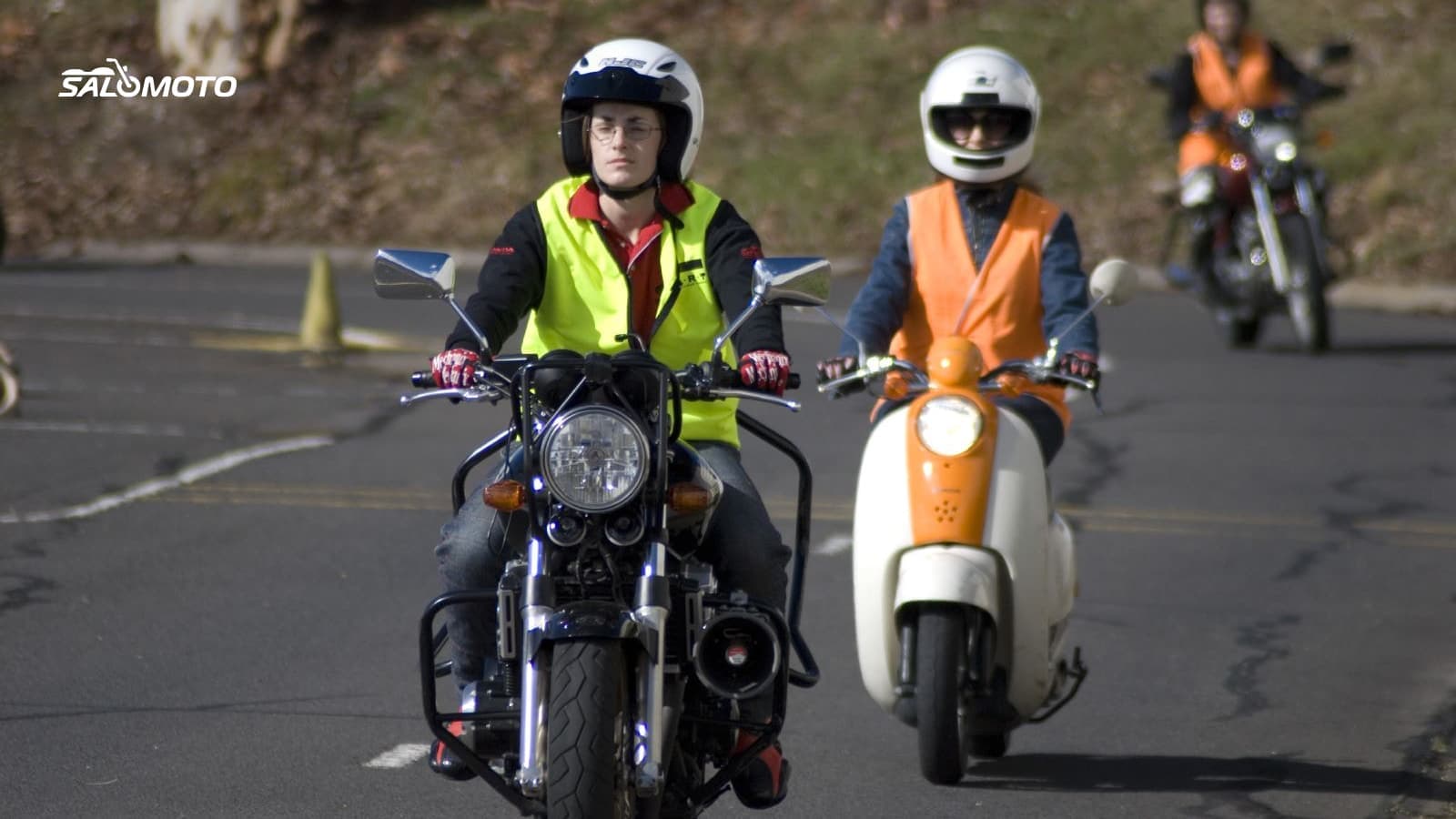
What makes a good first ride
After the course and the license test, your own motorcycle often feels different from the training bike: heavier, a different seat, a different throttle. Your first trip has one job: getting comfortable with your bike and with real traffic, with no instructor in your ear and no pressure.
A good first ride is:
- short: better to be home early than tired late
- familiar: roads you already know, so your attention goes to riding
- quiet: light traffic, no downtown rush hour, no famous scenic road on a holiday weekend
- flexible: shortcuts built in and nowhere you have to be at a set time
This page isn't a buying guide. If you're still choosing a bike, start with what kind of motorcycle to get first.
Plan the route: short, familiar, with ways out
- Pick the area: Somewhere close to home that you know from driving or cycling. New scenery can wait.
- Make it a loop: Start and finish at home, so you never have to turn around on a narrow road or hunt for a way back. Planning a motorcycle loop ride shows how to avoid riding the same stretch twice.
- Choose the roads: Well-kept two-lane roads with open, readable curves are ideal. Tight switchbacks, steep grades, gravel and heavy city traffic belong on a later ride.
- Mark your shortcuts: Find two or three points where you can bail out and head straight home.
- Plan breaks: A diner, a parking area with a view or a small town where stopping is legal. Regular breaks keep you fresh even when you feel fine.
- Pick the time: A dry weekend morning or early afternoon, outside rush hour, back well before dusk.
If you aren't sure how long the loop will take, add generous breaks to the estimated riding time. If you're riding on a learner's permit, check what your state's permit allows before you plan. What changes in rain, heat or wind is covered in planning rides around the weather.
Get ready: bike, gear, head
Done the evening before, the start is easy. The Motorcycle Safety Foundation's T-CLOCS checklist (tires and wheels, controls, lights, oil and fluids, chassis, stands) is a good routine to learn now:
- Tire pressure checked cold, tread and sidewalls look good
- Brakes, lights, turn signals and horn work
- Chain adjusted and lubed, no leaks under the bike
- Full tank, so you aren't hunting for fuel
- Full gear on, rain gear packed
- License, registration, insurance card, charged phone, water
- Someone knows your loop and when you'll be back
- Rested, sober, nothing on the calendar right after
Before you leave, spend a few minutes in an empty parking lot: starting off, slow riding, a U-turn, a firm stop. That's where you get to know the bike before traffic joins in. If braking or cornering still feels shaky, a course like the MSF Basic RiderCourse or a follow-up skills class is a smart next step. If the bike itself is what makes you nervous, see motorcycles that build confidence.
On the road: your pace, your calls
Ride with margin to spare. Slow in before a curve and roll on once you can see the exit, keep a big following distance and signal early and clearly. Let faster traffic pass; nobody is grading your ride.
Watch for the first signs of fatigue: tight shoulders, cold hands, a wandering mind. That means a break now, not in ten minutes. And if a stretch doesn't feel right, take the next planned shortcut. That's exactly why you marked it.
On a short loop you know, you usually don't need turn-by-turn directions. If you want to use a navigation app, set it up before you go and keep your eyes off the screen while you ride.
After the ride: review and build up
When you get home, jot down how it went: where you felt relaxed and where you tensed up. That tells you what the next ride should be, a bit longer, a few new roads or a small destination. To work up to realistic daily distances, read how far to ride in a day, and for planning bigger rides from start to finish, see how to plan a motorcycle trip.
Salomoto today: The Salomoto route planner is free without an account and covers Germany only. There you can plan a loop, see distance, estimated riding time and elevation, and download it as a GPX track. Salomoto does not navigate; use the GPS or app you prefer. With a free account, you can log the ride by hand in RoadDex, a ride log that doesn't record GPS.