Little practice is a bike question, too
Passing the course or the test proves you can ride. It doesn't give you the hundreds of small repetitions that make riding feel normal. If you got your endorsement and then rode only a handful of times, or you ride but tense up at every stop sign, the bike under you matters a lot. A forgiving bike lets you practice more and relax sooner. An intimidating one makes every ride feel like a test, so you ride less, and the gap grows.
This guide is about handling confidence: what makes a bike easy or hard to live with when experience is thin. If you're picking a category for the first time, start with choosing your first motorcycle. If you rode a lot years ago and are coming back, returning to riding after a break fits better.
What makes a bike forgiving, and what makes it intimidating
Most nerves start at walking pace: pulling out, U-turns, stopping on a slope, backing out of a parking space. These traits decide how those moments feel.
| Trait | Forgiving | Intimidating |
|---|---|---|
| Weight | light, carried low | heavy, with a tall tank or high center |
| Throttle response | smooth, gentle off idle | snappy on-off, power arrives suddenly |
| Clutch | light pull, wide engagement, or none | heavy pull, grabs at one narrow point |
| Steering lock | bars turn far, tight U-turns | small lock, U-turns take the whole street |
| Riding position | upright, clear view over traffic | leaned forward, weight on your wrists |
| Footing | stable stance on a crowned road | tiptoes, wobbling at every stop |
| Assists | ABS, ideally traction control and modes | no ABS on an older or budget bike |
Raw horsepower matters less than how the power arrives; for engine size, see what size motorcycle to start on. Footing depends on more than the seat height number, which is covered in motorcycles for short riders. If the clutch and gear changes are what tie you in knots, look at automatic or manual: scooters and bikes with automatic transmissions remove that workload entirely.
Checks that show how forgiving a bike is
These go beyond the general test-ride list and focus on low-speed confidence:
- Push the bike backward a few yards, ideally up a slight slope
- Turn the bars to full lock while seated: can you still reach both grips comfortably?
- Pull away gently several times: does the bike creep smoothly or lurch?
- Ride at walking pace in a straight line and in a wide circle
- Hold the clutch in for a minute, as you would in traffic: does your hand tire?
- Stop on a slight slope and hold the bike with your feet
- Ask yourself afterward whether you'd want to ride it again tomorrow
Build practice on purpose
A confidence-building bike only helps if you ride it. Short, frequent sessions beat one long ride a month.
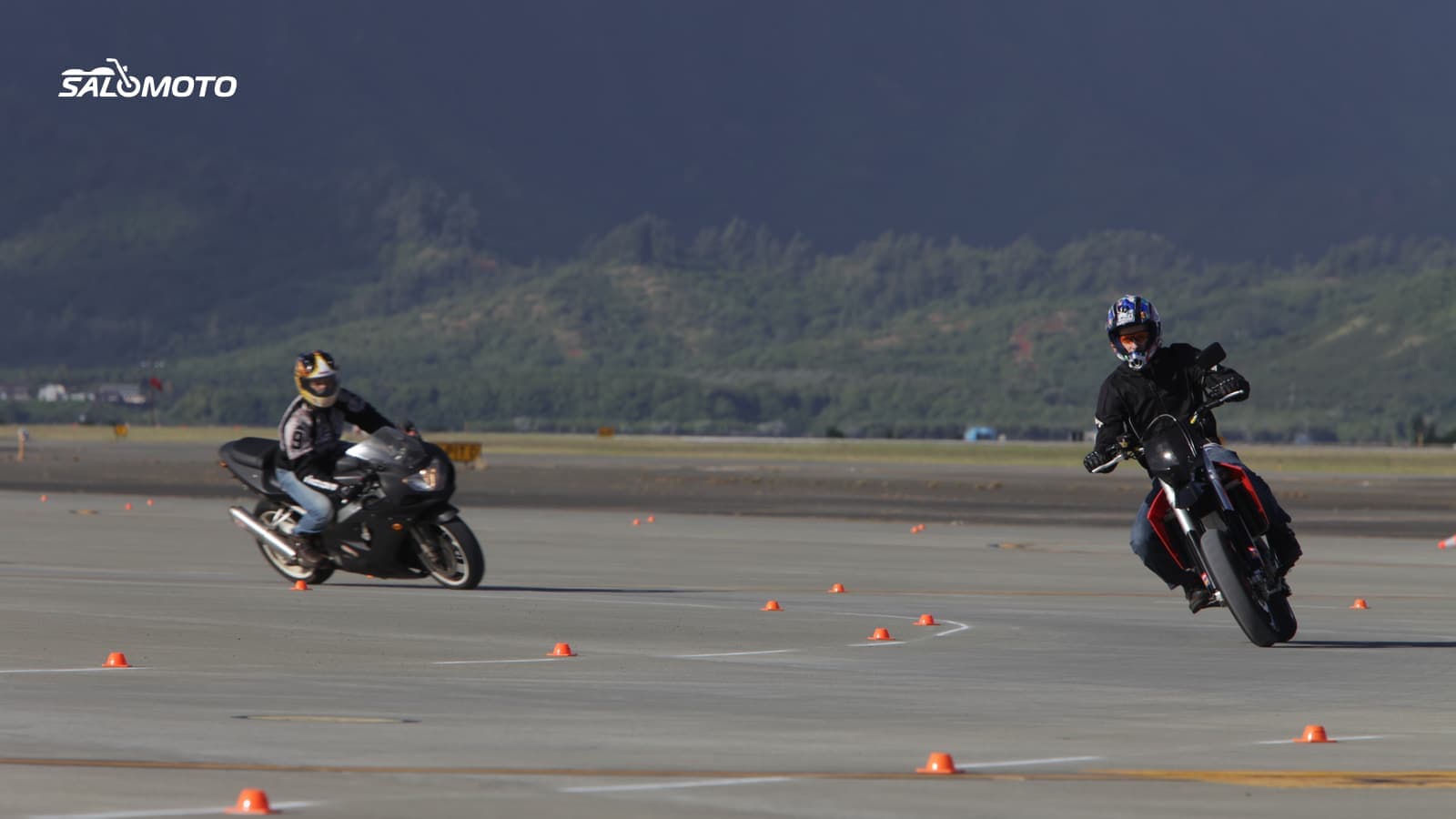
- Drills in a safe, permitted place: an empty lot you have permission to use, or a training range. Work through slow straight lines, wide then tighter turns, smooth stops and starts. Keep it simple and stop when you get tired.
- A course on your own bike: many state programs offer a Basic RiderCourse 2 for licensed riders on their own motorcycles; New Jersey's program, for example, runs Skills Practice and Skills Plus versions. Learning your own bike with a coach is worth more than months of solo guessing.
- Rides with a mentor: one experienced rider, quiet roads, your pace, frequent breaks.
- Widen your comfort zone in steps: familiar roads first, then busier traffic, then longer rides.
This page doesn't teach technique; instructors do that far better in person.
When to trade down the bike you already own
Sometimes the bike is the problem. Signs it's asking too much right now:
- you skip rides because getting it out of the garage is stressful
- you plan routes around U-turns, slopes and tight parking
- you've dropped it at a standstill more than once
- you feel relieved when a ride is over
Before you sell, try the softest riding mode, a course on that bike and some crash protection. If the dread stays, a lighter, lower, simpler bike is the faster route to real experience. Plenty of riders move back up later, with skills that make the bigger bike enjoyable rather than stressful.