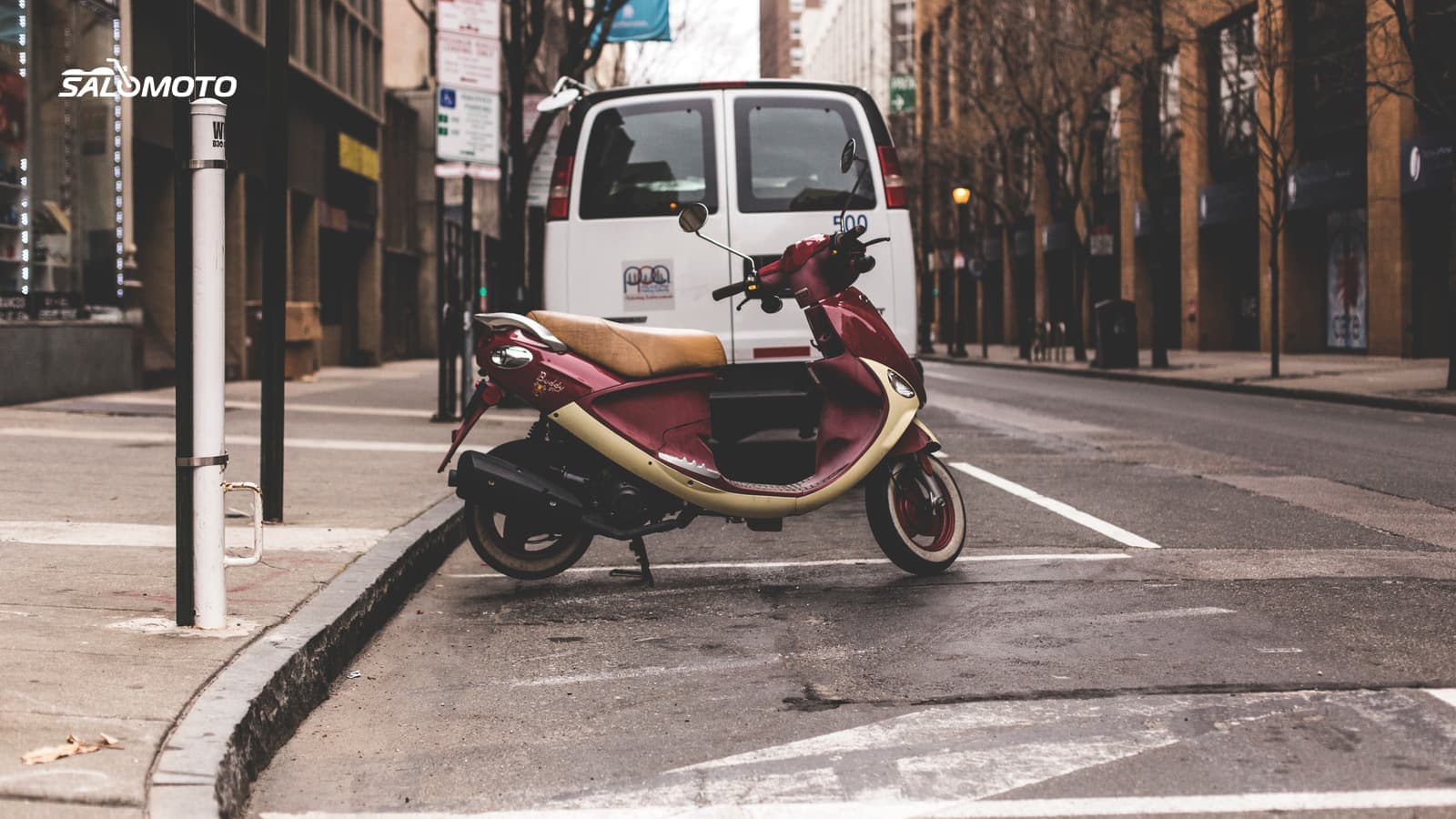
What the Vespa price actually buys
Vespa isn't a type of scooter. It's a scooter brand made by the Italian company Piaggio, and it's built differently from a lot of what else is on the showroom floor. If you want to know whether the extra money is worth it, break it into parts:
- A steel body: Since 1946, Vespas have been built around a load-bearing body of pressed sheet steel instead of plastic panels bolted onto a tube frame. It feels solid, and a dent can often be pulled and repainted where a plastic panel would simply be replaced.
- The shape: The silhouette has changed only gradually over the decades, and Piaggio protects it as a three-dimensional trademark in the EU. You're buying a look that won't feel dated in a few years.
- The community: Vespa clubs exist in many countries, with rallies, group rides and a deep aftermarket for accessories. For a lot of owners, that's half the fun.
- The used market: Many people buy a Vespa expecting it to resell well. Whether that holds for your model is something current local listings can tell you; the badge can't.
What you don't automatically get: more safety, more storage or more comfort. Those come from the scooter's design, the specific model and its equipment, not the logo. If you've already settled on the brand, Which Vespa is right for me? helps you choose a line.
What other scooter designs do differently
Other scooters aren't just cheaper Vespas. Many are designed around different priorities:
| Design | Strengths | Watch for |
|---|---|---|
| Vespa | solid feel, timeless shape, repairable steel | price; storage tight on some models |
| Big-wheel scooter | calmer over potholes and rough pavement | taller seat, less room under it |
| Small-wheel city scooter | nimble, low, lots of storage | busier on broken pavement |
| Maxi-scooter | weather protection, storage, highway reserve | heavy, wide, costlier to run |
| Retro scooter, other brands | similar look, often cheaper | usually plastic; check build quality |
Big-wheel scooters roll on wheels up to about 16 inches. Classic city scooters sit on smaller wheels of roughly 10 to 12 inches, and Vespas generally fall closer to that end. Bigger wheels smooth out bad pavement; smaller ones make the scooter more maneuverable and leave more room under the seat.
Not every scooter has a flat floorboard where a bag or a case of water can ride; some have a center hump. Check whether your everyday load really fits. For how engine size shapes the choice, see First scooter: 50cc, 125cc or something bigger?.
Running costs, service and repairs
With the same engine size, gas and wear items usually differ less between a Vespa and another scooter than the sticker price does. The real differences show up elsewhere:
- Distance to a dealer: Scooters need regular service. Before you buy, find the nearest dealer or independent shop that works on that brand. In some parts of the US that can be a long drive, whatever the brand.
- Parts: Ask what common parts cost, such as a side panel, a mirror or a brake lever. You'll want them after your first tip-over.
- Paint and rust: Steel is tough but rusts where the paint is broken. Road salt and stone chips deserve attention.
- Plastic: Panels crack more easily in a drop but are often cheap to swap. Deep scratches rarely disappear completely.
- Service schedule: Check the owner's manual for intervals. They often vary more between models than between brands.
For the full picture, including insurance, tires and depreciation, read How to keep a motorcycle cheap to own and Cheap motorcycle insurance.
Which choice fits which rider
A Vespa makes more sense if…
- design and materials matter enough that you'll ride more often because of them
- you mostly ride in town and nearby, and the storage works for you
- clubs, rallies and accessories appeal to you
- you plan to keep the scooter a long time and look after it
Another scooter makes more sense if…
- a full-face helmet, groceries or work gear has to come along every day
- your route crosses potholes, rough pavement, rail crossings or streetcar tracks
- you ride a lot in rain, cold or at highway speeds
- money is tight and you'd rather put it into good protective gear
Still deciding between a scooter and a motorcycle? Read 125cc motorcycle vs. scooter. Weighing power sources? Electric vs. gas covers that, and Vespa does make electric models too.
Test-ride both, back to back
The fairest comparison is riding a Vespa and an alternative on the same day over similar roads. On top of the general first-bike test-ride checklist, check these:
- Your own helmet under the seat: does it fit, and does the seat still close?
- Feet and cargo on the floorboard: where would a bag go?
- Rough pavement, manhole covers, tracks: how settled does the scooter stay?
- Wind at your usual speed: where does it hit you, and how loud is it in your helmet?
- Center stand: can you put the scooter up without a struggle?
- Tight U-turns: which one feels easier?
- Fit and finish: rattles, panel gaps, switches, on both
- Afterward, be honest: which one are you looking forward to riding tomorrow?
If a used scooter is on the table, Vespa or not, you can look through real listings with Bike Hunt.