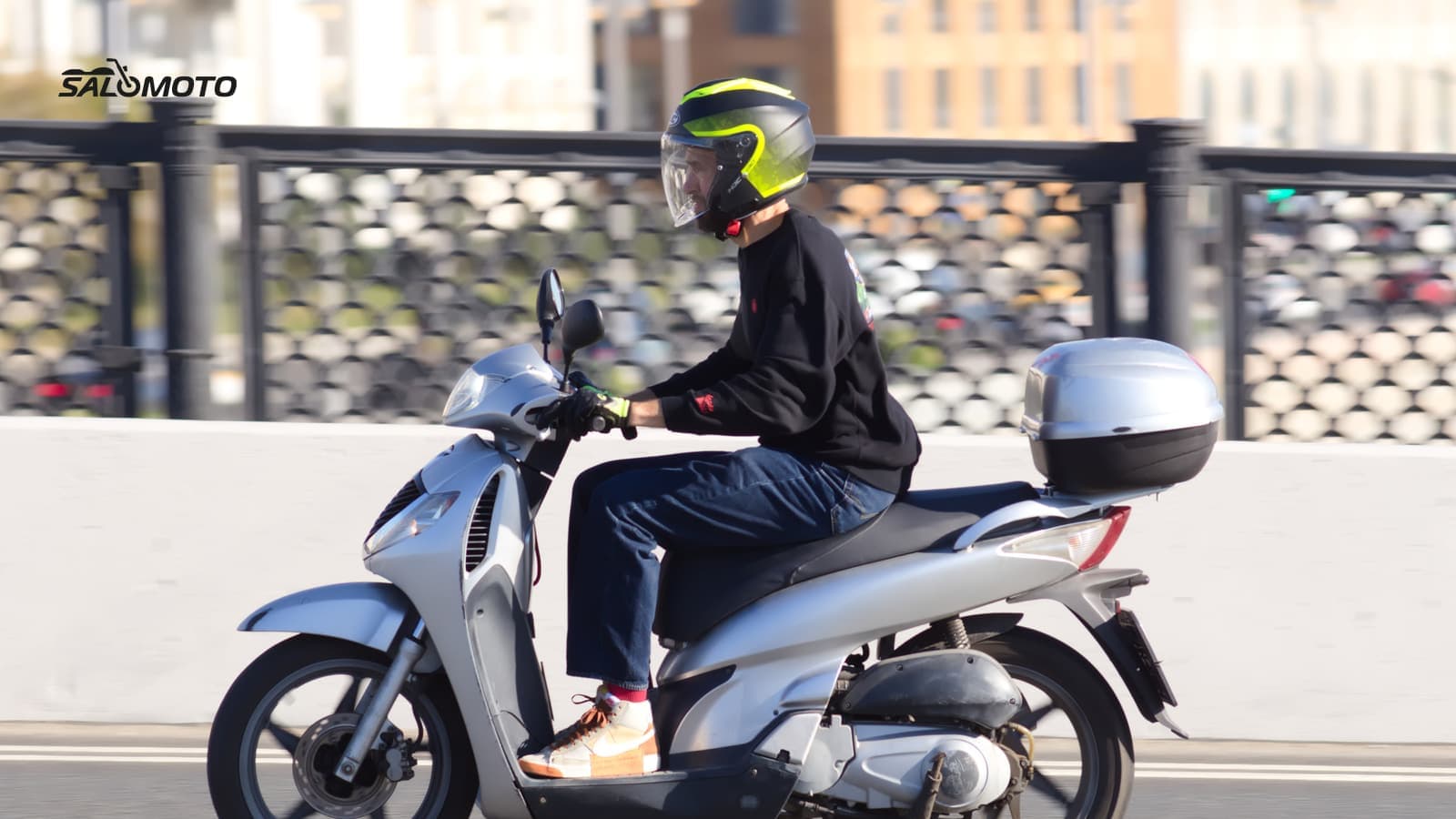
Start with your route, not the showroom
A lot of first scooters are bought on looks or price. The better first question is: where will you ride on an ordinary day? A scooter has to keep pace with the traffic around it. If you're only on slow city streets, a 50cc scooter does the job. If your route includes a 45 mph arterial or a suburban road where everyone is doing 50, a small scooter gets passed again and again, and that's more nerve-racking for a new rider than a slightly stronger scooter you never have to push.
Settle three things before you shop:
- Route: city streets only, suburbs with faster roads, or highways too?
- License: what does your state require for the scooter you have in mind?
- Daily life: what do you need to carry, and where will you park: a garage, a sloped driveway, the street?
If the scooter is mainly for getting to work or school, weather, costs and parking are covered in more depth in choosing a commuter motorcycle or scooter.
50cc, 125–150cc or bigger
| Class | Suits | Limits |
|---|---|---|
| 50cc (moped class) | short trips on slow streets | falls behind on faster roads |
| 125–150cc | city, suburbs, arterials | not built for long highway stretches |
| Bigger scooter | longer commutes, highway riding | heavier and wider for a beginner |
Licensing for scooters varies by state, more than for any other kind of two-wheeler. Some examples:
- California: a scooter under 150cc is a "motor-driven cycle" and needs an M1 motorcycle license; mopeds need an M1 or M2. Riders under 21 must complete the state-approved training course first.
- New York: mopeds are classed A, B or C by top speed. The fastest class needs a motorcycle license, and all three must be registered.
In many states, a scooter that's too big or too fast to count as a moped is legally a motorcycle. Check your state DMV before you buy, and see what you can ride on which license for the bigger picture.
For a lot of complete beginners, a 125–150cc scooter is the most sensible middle ground: enough power for arterials, still light enough to push around a parking lot. A bigger scooter earns its place once highway miles are a regular part of your week. If you're also weighing a small motorcycle, see 125cc motorcycle vs. scooter.
Wheels, weight, seat and storage
Wheel size
Small wheels, often 10 to 12 inches, make a scooter nimble and usually leave more room under the seat. Bigger wheels, up to about 16 inches, roll more calmly over potholes, cracked pavement and streetcar tracks and feel steadier at speed. If your streets are rough or you ride faster roads, big wheels give you more composure; the trade-off is usually a taller seat and less storage.
Weight and seat
You'll move a scooter by hand all the time: out of the garage, backward out of a parking space, up onto the center stand. Try exactly that before you buy. Many scooters have a wide seat that makes the reach to the ground longer than the spec-sheet seat height suggests. If that's tight, read motorcycles for short riders.
Storage
Check whether your helmet fits under the seat, whether there's a flat floorboard for a bag, and whether there's a cubby for your phone. A rear top box can usually be added later.
Twist-and-go: the big advantage for new riders
Nearly every scooter has an automatic transmission (a CVT). Twist the throttle, brake, steer: no clutch, no shifting. If you've never been on a powered two-wheeler, that frees your attention for traffic, where you look, and balance. Both brakes are hand levers on the handlebar.
Two things take getting used to. Power can come in abruptly when you pull away, so a gentle hand matters. And closing the throttle slows you less than on a geared motorcycle, so you brake earlier and more deliberately. Whether an automatic will suit you for the long run is covered in automatic vs. manual motorcycle.
Your first rides
Before you ride in traffic, take a basic rider course or at least practice in an empty parking lot. Helmet laws vary by state; wear a DOT-compliant helmet regardless, plus gloves, a jacket and real shoes, even for a quick run to the store.
- Pull the scooter up onto its center stand and roll it off again on your own
- Push it backward out of a parking space, including a slight uphill
- Put your helmet under the seat: does the seat still close?
- Pull away gently in a parking lot: how abruptly does the power come in?
- Make slow, tight circles and stop smoothly with both brakes
- Use the turn signals and horn without looking down
- Sit on it in your helmet and gloves: are you steady at a stop?
For the general sit-on and test-ride checklist, see choosing a first motorcycle.
Legal information on this page refers to the United States, where rules vary by state.