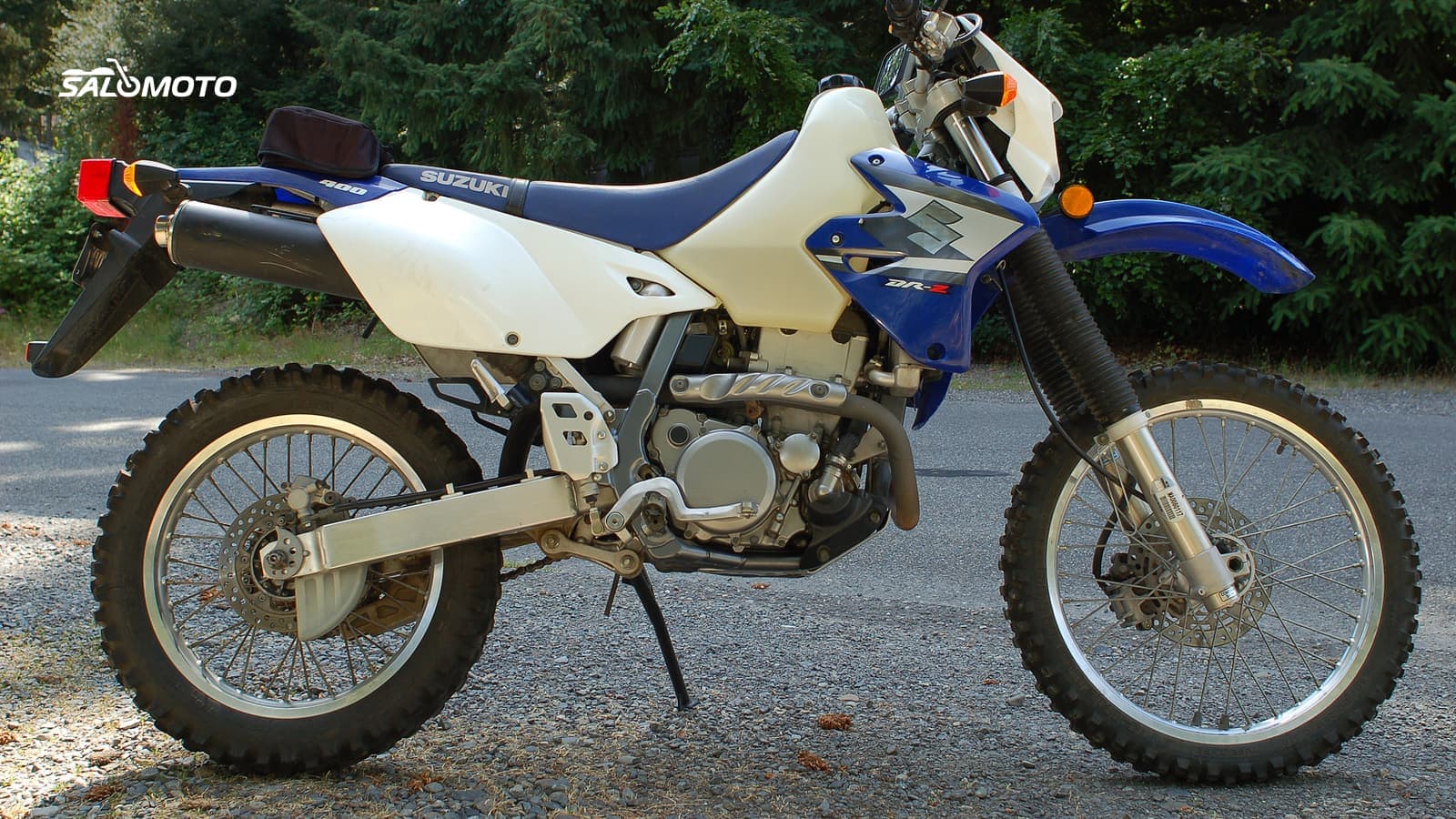
Same family, different ground
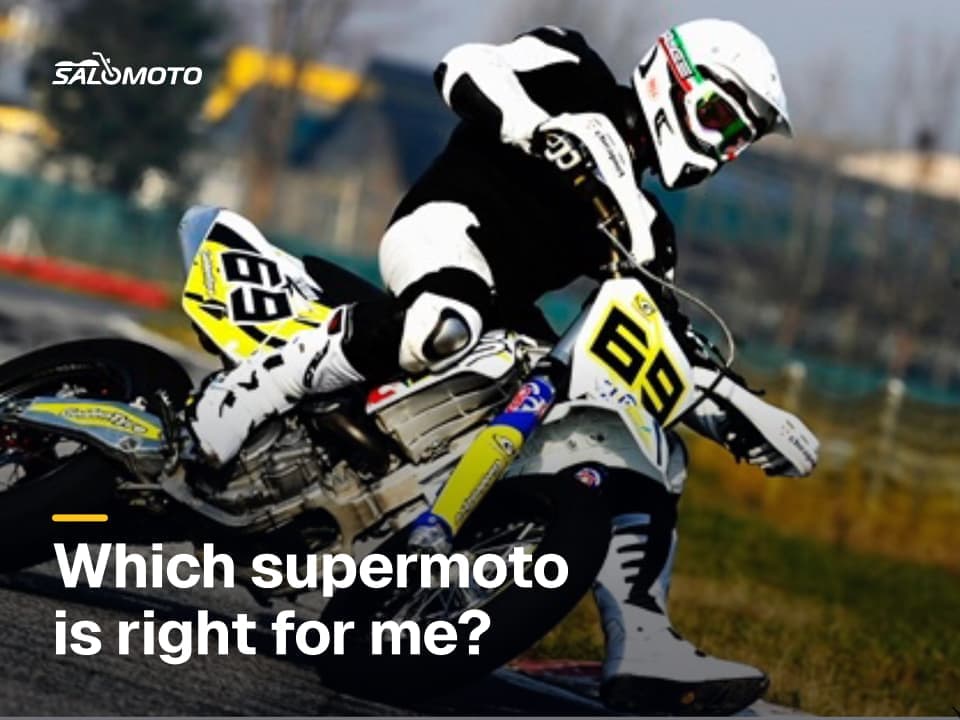
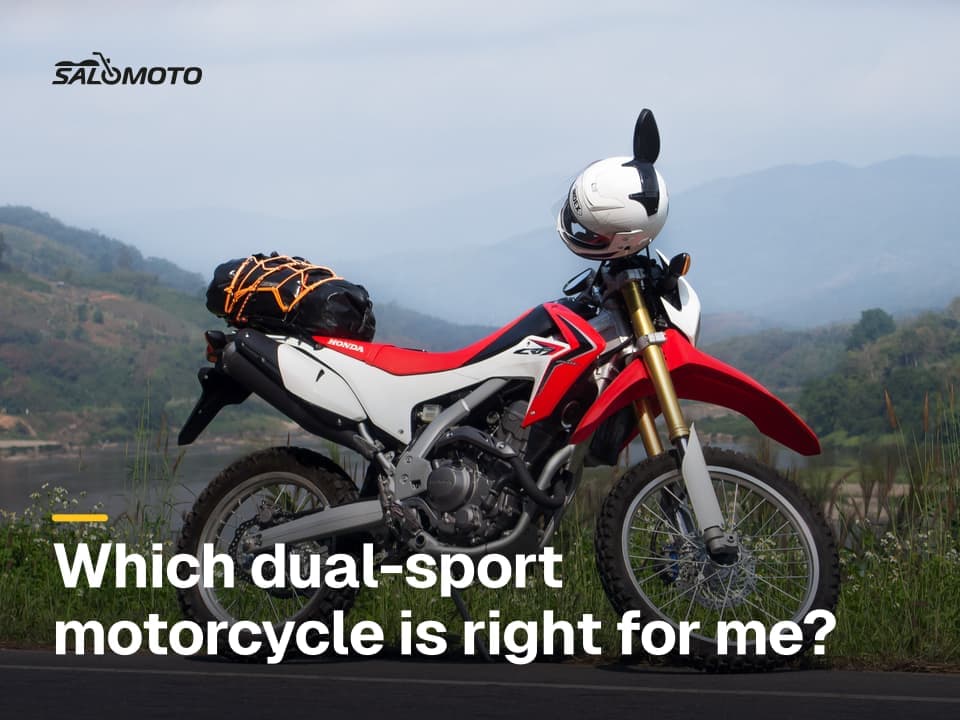
Supermotos and dual-sports are close relatives. The first supermotos were dirt bikes with road wheels bolted on, and many models still share a frame, an engine and the same slim, tall shape. You sit upright behind wide bars with plenty of room to move around. What sets them apart is everything that touches the ground or soaks up bumps: wheels, tires, suspension and brakes.
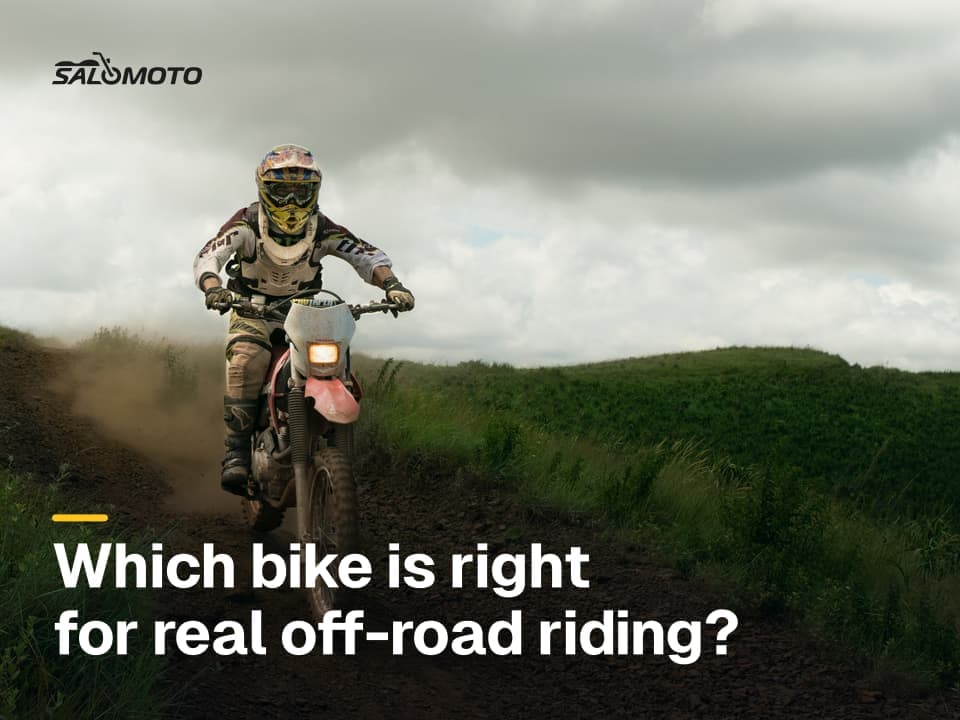
One word on names: in the US, "enduro" usually means an off-road-only bike without a plate. This guide compares street-legal bikes, so the real choice is supermoto versus dual-sport.
The useful question isn't which bike is better. It's where you'll ride most of your miles. Be honest: the weekend dirt-road loops often happen less than the daily ride across town. Or the reverse: your commute runs over county gravel and a supermoto would fight it every day.
Wheels, tires, suspension: what actually differs
| Feature | Supermoto | Dual-sport |
|---|---|---|
| Wheels | usually 17 inches front and rear | typically 21-inch front, 18-inch rear |
| Tires | wide street tires | narrow knobbies or 50/50 tires |
| Suspension | shorter travel, firmer | long travel, built for rough ground |
| Front brake | big rotor, strong bite | smaller, easier to modulate in the dirt |
| Seat height | tall, often a bit lower than a DS | tall to very tall |
| Feel | quick, direct steering | calm, forgiving, soaks up hits |
The tall, narrow 21-inch front rolls over rocks, roots and ledges more easily, but it makes the bike slower to turn in on pavement. The small 17-inch wheels let a supermoto run wide street rubber and a large front rotor, which is exactly what builds grip and confidence on asphalt and helps little in the dirt.
On brakes, some dual-sports let you switch ABS off or select an off-road mode; whether the bike you want can do that is on its spec sheet.
Where each one is fun
Supermoto: pavement, city, kart tracks
A supermoto is made for short, twisty stretches. In traffic it's nimble and stops hard; on tight back roads it feels light and playful. Its real home is the track: supermoto racing typically runs on kart tracks with a short dirt section, and some kart tracks and small circuits hold practice days. Ask around locally, because a track is the right place to ride hard. Long interstate stints aren't its thing: almost no wind protection, a firm seat and a small gas tank.
Dual-sport: gravel, dirt roads, bad pavement
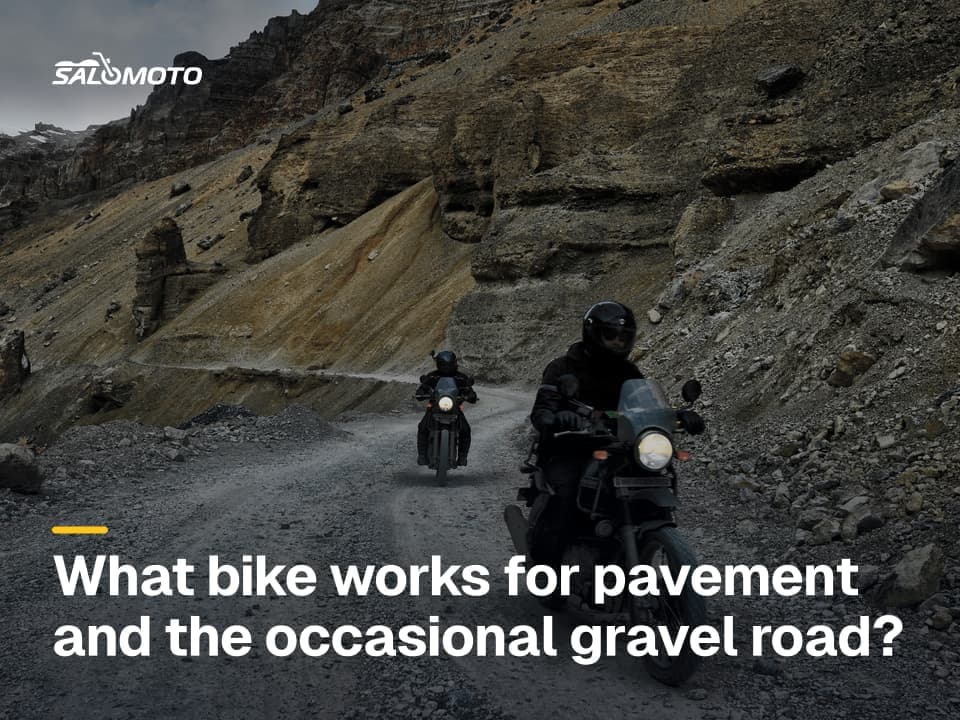
A dual-sport is happiest where the pavement ends or falls apart: gravel county roads, forest service roads that are open to motor vehicles, and potholed streets. It's perfectly usable on asphalt, with less grip, more tire noise and faster wear if you run aggressive knobbies. If you're also planning longer trips with luggage, read a motorcycle for pavement and gravel, which also covers bigger adventure bikes.
Can you turn a dual-sport into a supermoto?
Because the base is so similar, the idea is tempting: buy a dual-sport and keep a second set of 17-inch wheels with street tires in the garage. Wheel sets exist for many models, and the principle works. Expect more than just rims, though:
- Brakes: supermoto wheels usually carry a bigger front rotor, which needs a matching caliper bracket.
- Sensors: the ABS tone ring and speedometer pickup have to work with the new wheel.
- Suspension: long dual-sport suspension dives a lot on pavement; without changes, it still feels soft.
- Gearing and chain: the smaller wheel changes the effective gearing and sometimes the chain line.
- Street-legal: keep road tires DOT-marked and check your state's equipment rules with the DMV if you're unsure.
The other direction rarely works as well: a supermoto keeps its short suspension and lower ground clearance. If you truly ride both kinds of ground often, a dual-sport plus a wheel set usually beats the reverse.
Decision table: which one fits you?
| If you… | lean toward |
|---|---|
| ride mostly pavement, lots of city and tight corners | supermoto |
| want to try kart-track practice days | supermoto |
| ride gravel or broken pavement every week | dual-sport |
| want legal trails and OHV areas | dual-sport |
| want both about equally | dual-sport plus wheel set |
| plan long trips with luggage | an adventure bike, see above |
Once you've picked a side, carry on with which supermoto fits you or which dual-sport fits you. On a test ride, compare the things that differ: how the front brake bites, how willingly the bike turns into a tight corner, and how comfortable you are standing on the pegs. The general checklist is in choosing your first motorcycle. Whichever you choose, wear full protective gear on both.
Legal information on this page refers to the United States, where rules vary by state.