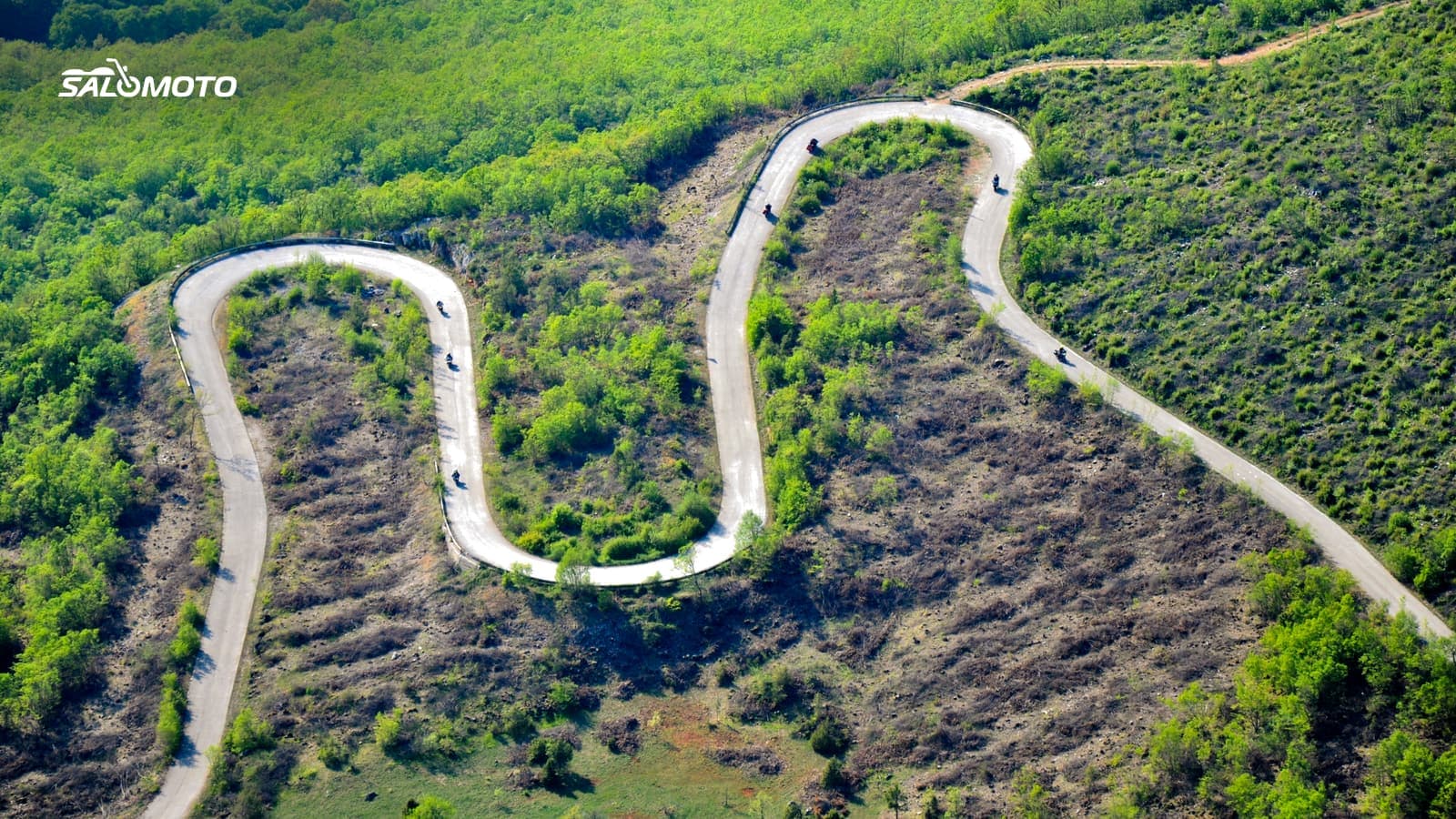
What makes a bike good in the twisties
On a winding road, what a motorcycle does on the straights barely matters. What counts is how easily it changes direction, how settled it stays when leaned over and how precisely it answers your hands. Six traits make the difference:
- Low weight and agility: A lighter bike takes less effort to tip into a turn and to flick through an S-bend, and it wears you out less over a long day of curves. Where the weight sits, high or low, matters as much as the number on the spec sheet.
- Neutral steering: The bike neither falls into the turn on its own nor fights to stand up. It holds the line you chose and lets you adjust mid-corner. Tires and tire pressure play a big part here.
- Predictable throttle: The step from closed to slightly open throttle should be smooth, with no jerk. An engine that pulls evenly in the midrange saves you from busy shifting before every switchback.
- Suspension quality and setup: Good suspension keeps the tire on the pavement over bumps and patched asphalt. Setup matters just as much: a premium shock with the wrong preload rides worse than a basic one set up for your weight.
- Brakes and cornering ABS: Brakes with a clear, progressive feel build confidence. Cornering ABS uses a sensor that tracks lean angle and adjusts braking in a curve accordingly. Not every bike has it, and brands market it under different names.
- Ground clearance: How far the bike leans before footpegs, floorboards or exhaust touch down. Cruisers tend to run out early; standards and dual-sports usually have plenty.
Upright or sporty riding position?
For street riding, sitting upright has more going for it than its reputation suggests. You sit higher, see over crests and farther through the turn. Wide bars give you leverage, so the bike turns in with less effort. And because your wrists carry no weight, you can keep a loose grip on the bars, which matters: stiff arms upset steering more than any tire choice.
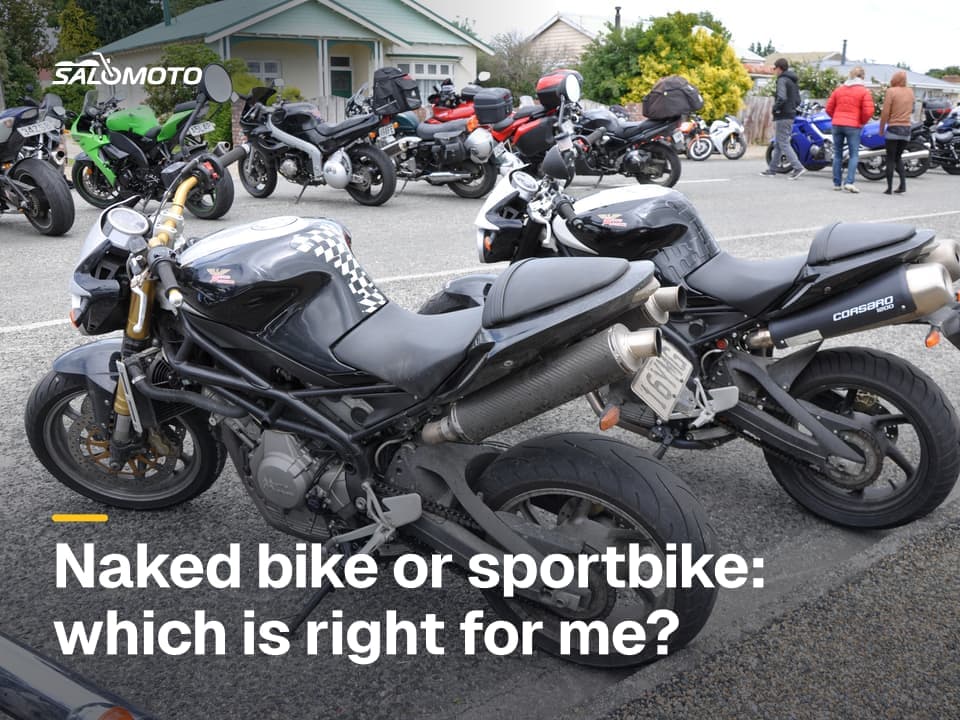
A tucked sportbike position puts more weight on the front and gives a direct feel for the front tire, but that pays off mostly on a racetrack. On a tight mountain road you have to crane your neck to look through a hairpin, and your wrists take a beating braking downhill. If you like the position and stay relaxed in it, it can still work; the full comparison is in naked bike vs. sportbike.
Check the footpegs, too. High, rearset pegs add ground clearance but bend your knees more, which can get old on a long day in the mountains.
Which kinds of bikes suit winding roads
| Type | Strength in corners | Watch for |
|---|---|---|
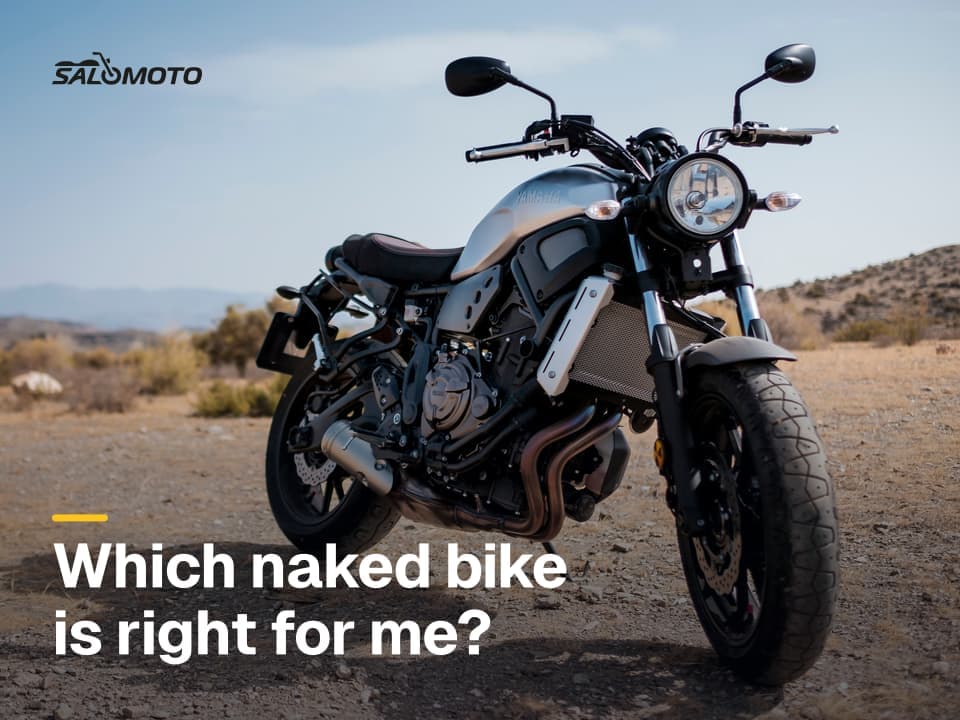
| Standard / naked | upright, agile, wide bars | some engines are very abrupt off idle |
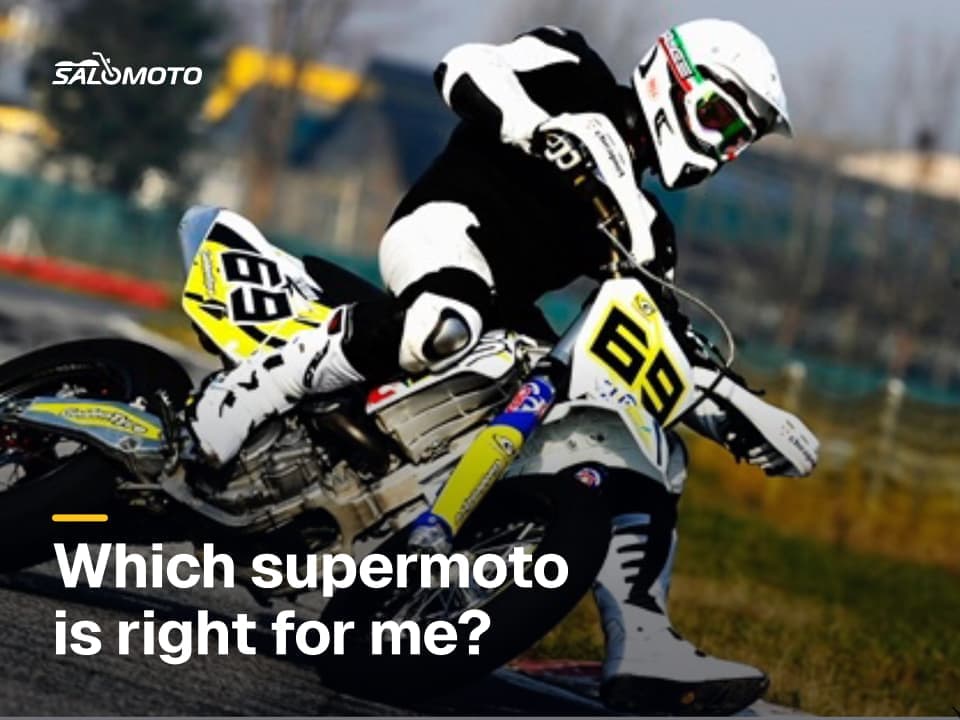
| Supermoto | very light, nimble in tight turns | tall seat, little comfort on the ride there |
| Light dual-sport | upright, long travel, great view | knobby tires grip less on pavement |
| Sportbike | precise chassis, lots of clearance | tucked position, built for the track |
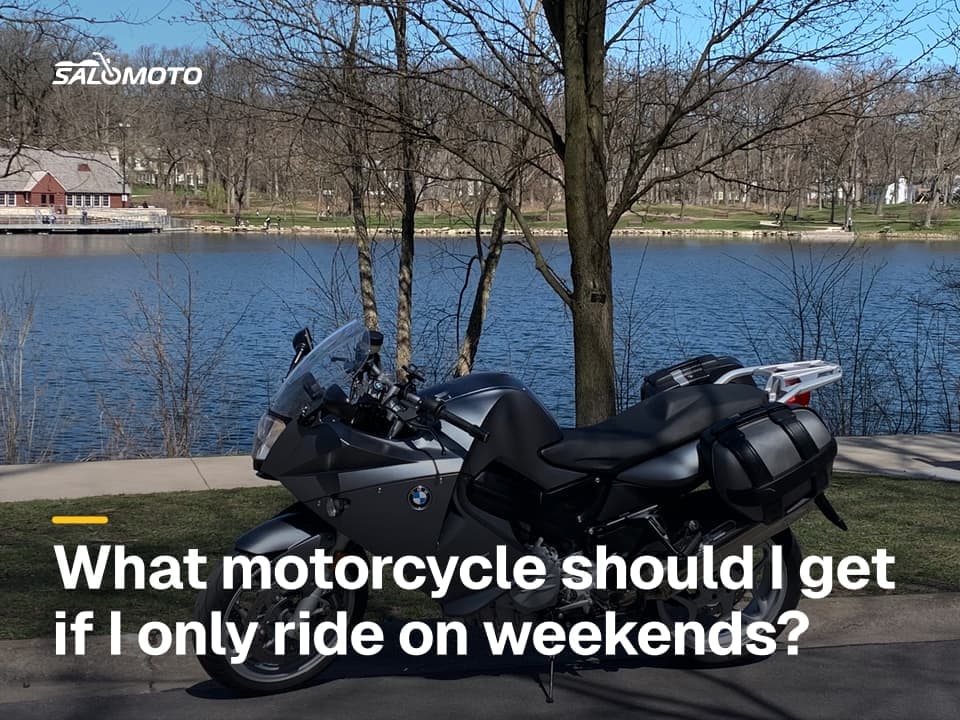
| Sport tourer | stable, wind protection on the way out | heavier in tight switchbacks |
| Cruiser | relaxed engine, low center of gravity | pegs and floorboards scrape early |
| Modern classic | upright, often light | suspension can be basic |
For many riders, a midsize standard or a light dual-sport on street tires is the most relaxed partner on twisty roads. To find the right naked class, see which naked bike fits you; if tight turns are your thing, look at supermotos. And if the bike is mainly for Saturday rides, read choosing a weekend motorcycle. Lots of horsepower rarely helps in tight corners; mostly it asks for a finer throttle hand.
Your skills matter more than the bike
A bike that corners well forgives more, but it doesn't ride for you. Vision, lines, braking before the turn and a feel for lean angle come from training, not from a purchase. Pennsylvania's state program, for example, offers an Advanced Rider Course for riders with at least 3,000 miles of experience, on their own bike and gear, focused on mid-corner traction and ground clearance. Many states and private schools run similar advanced courses; check your state's rider education program.
On public roads, ride with margin: at a pace where you can stop within the distance you can see, including around a blind curve where a car may be drifting over the center line. In a group, everyone rides their own ride, and if you get tired, take a break. Exploring limits belongs on a closed course, not a canyon road.
Wet pavement, gravel and mountain roads
Grip changes from one corner to the next. Shaded sections stay damp long after the sun is out, gravel washes onto corner exits after rain, tar snakes get slick in heat and wet, wet leaves pile up in fall, and in open-range country there may be cattle on the road. Cold tires first thing in the morning and at altitude grip less. Traction control and cornering ABS help, but they don't add grip; they only manage what's there.
Test ride: checks specific to corners
- Does the bike turn in easily and evenly through a curve or a traffic circle?
- Roll off and back on the throttle in second or third gear: smooth or snatchy?
- Brakes: clear feel at the lever, easy to modulate?
- Spec sheet: cornering ABS, ride modes, adjustable preload?
- In riding position, turn your head: can you look well into a turn without straining?
- Where do the pegs and exhaust sit, and how soon might they touch down?
- Tires: are the type and age right for how you'll ride?
The general sit-on and test-ride checks are in choosing your first motorcycle.