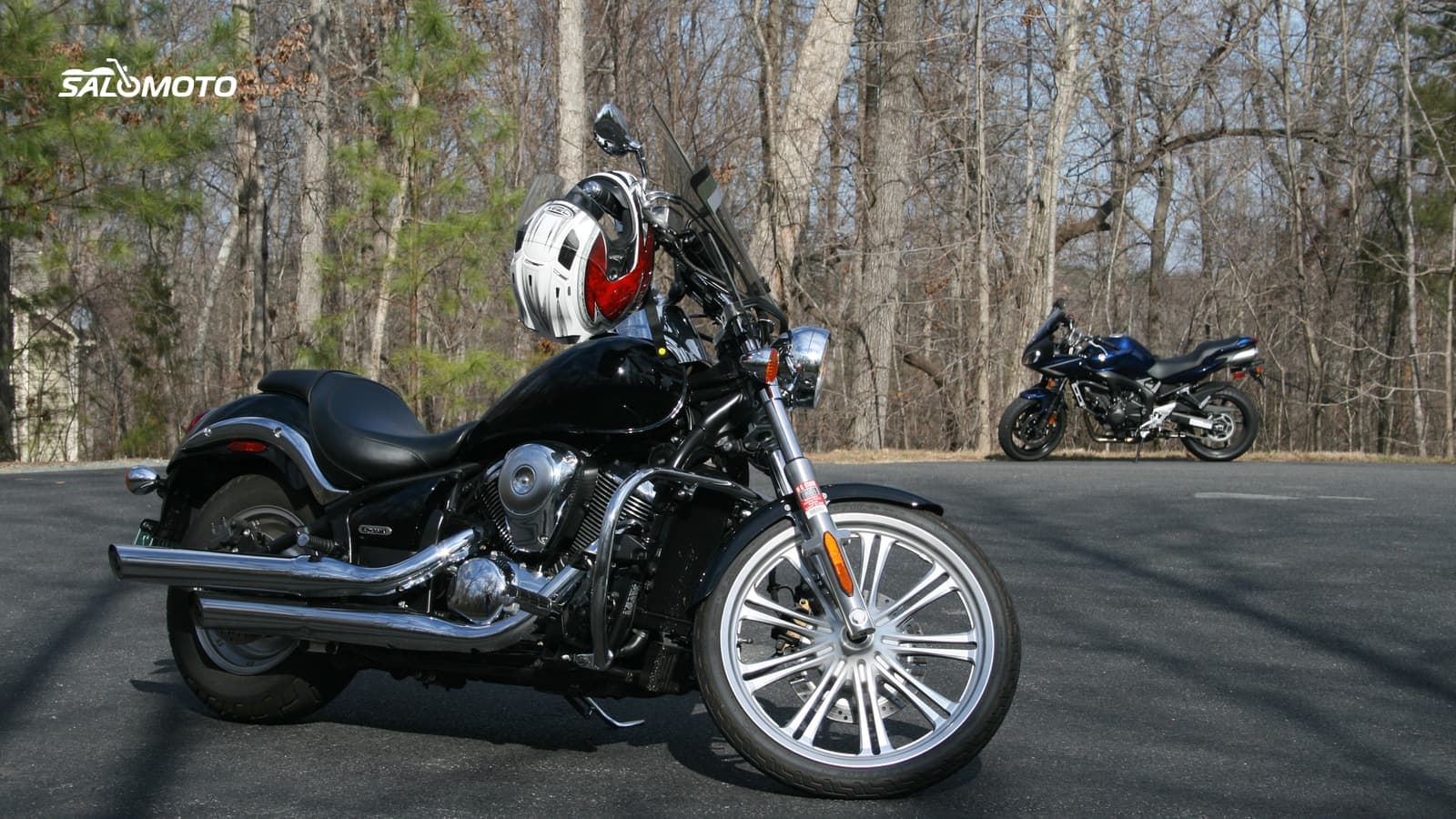
What a cruiser is, and who it's for
A cruiser is built for relaxed riding: a long, low profile, a low seat, and usually an engine that pulls hard from low rpm. You sit upright or leaned back slightly, feet forward, hands out in front of your chest. It's a bike that invites you to roll along with traffic on a two-lane road, not to chase corners in the canyons.
A cruiser is often a good fit if you:
- would rather cruise than hurry, and value torque over revs
- care about the sound, the look and how the bike feels underneath you
- feel secure on a low seat and can manage some weight
- like the idea of making the bike your own over time
You're more likely to be frustrated if you want to ride corners aggressively, spend a lot of time on tight switchbacks, or need a light bike for daily maneuvering in town. If it's mostly the classic look you're after and not the feet-forward stance, check out modern classics, where you usually sit more upright with your feet under you.
A low seat on a heavy bike
The low seat is what draws many riders in, and it's a little misleading. Planting your feet is often easy on a cruiser, but many of them carry noticeably more weight than a standard bike with a similar engine. You barely feel it once you're rolling, because the weight sits low. You feel every pound when you push the bike, back it out of a sloped parking spot, make a U-turn on a narrow street or stop on a hill. A wide seat and pegs set far out can also mean your legs don't drop straight to the ground despite the low seat height.
| Size | Typical traits | Good for | Watch for |
|---|---|---|---|
| Small | manageable, approachable | new riders, town, back roads | little reserve with bags or a passenger |
| Midsize | balanced, wide choice | evening rides and road trips | check the weight and peg position |
| Large | big engine, smooth, a lot of mass | long distance, riding two-up | parking lots, U-turns, lean angle |
In most states, a full motorcycle license covers a cruiser of any size, so the decision is yours rather than the DMV's. Rules vary by state, so check with yours. If you're newer to riding, what size motorcycle to start on is worth reading before you fall for a big-inch V-twin.
Forward controls or mids, and the reach to the bars
Nothing changes how a cruiser feels as much as where your feet go:
- Forward controls: Legs stretched out ahead, very relaxed on the open road. But you can't brace with your legs, bumps go more directly into your lower back, and the brake pedal and shifter sit a long way out.
- Mid controls: Feet roughly under you, much like a standard. Many riders find slow-speed riding and shifting their weight easier this way.
- Floorboards: Common on big cruisers and baggers. Lots of room to move your feet, but they touch down early in corners.
Then there are the bars: often wide pullbacks on cruisers, flatter on bobbers, sometimes very tall on custom builds. Turn them to full lock while seated and check that you can reach the outside grip with a slightly bent arm. If you have to twist your upper body, every U-turn becomes work. Some states cap handlebar height; Washington, for example, limits grips to 30 inches above the seat. If your inseam is the issue, see motorcycles for short riders.
Lean angle: where a cruiser draws the line
Low means less ground clearance. On many cruisers, pegs, floorboards or exhaust touch down in corners much earlier than on other kinds of motorcycle. Usually small feelers under the pegs scrape first: not a defect, but a signal that you've reached the limit. Riders who don't expect it get a scare in the first brisk corner. Power cruisers generally have more clearance. A rider course on your own bike shows you where the limits are before the road does.
Bobbers, power cruisers, baggers: the sub-styles
| Style | Typical traits | Suits | Watch for |
|---|---|---|---|
| Classic cruiser | long, low, lots of torque | relaxed touring | weight, ground clearance |
| Bobber | chopped fenders, solo seat, stripped | short rides, purists | often no passenger seat stock |
| Power cruiser | strong engine, better brakes and suspension | cruiser looks with more punch | lots of power and weight |
| Bagger | front fairing, hard saddlebags | long trips with luggage | a lot of mass to maneuver |
| Chopper | long raked front end, often tall bars | show and custom culture | handling, reach to the bars |
On long rides the seat is usually comfortable, but without a windshield the wind works on your chest; a windshield or a backrest changes a lot. If someone will ride with you, look closely: bobbers often have no room, baggers usually have plenty. What matters there is covered in riding two-up.
Customizing is part of cruiser culture. Before you change exhaust, lighting or bars, check what your state allows. If looks come first for you, also read stylish motorcycles.
Cruiser checks for the showroom and test ride
- Can you reach the pegs with a slight bend in your knee, without sliding forward on the seat?
- Work the brake pedal and shifter in your boots without lifting your heel
- Turn the bars to full lock: can you reach the outside grip without twisting?
- Lift the bike off the kickstand; many cruisers lean far over on it
- Push it a few yards backward, ideally slightly uphill
- Make a slow U-turn on a narrow street
- After half an hour of riding: how do your back, neck and wrists feel?
For the general test-ride checklist, see choosing your first motorcycle.
Legal information on this page refers to the United States, where rules vary by state.