How each final drive works
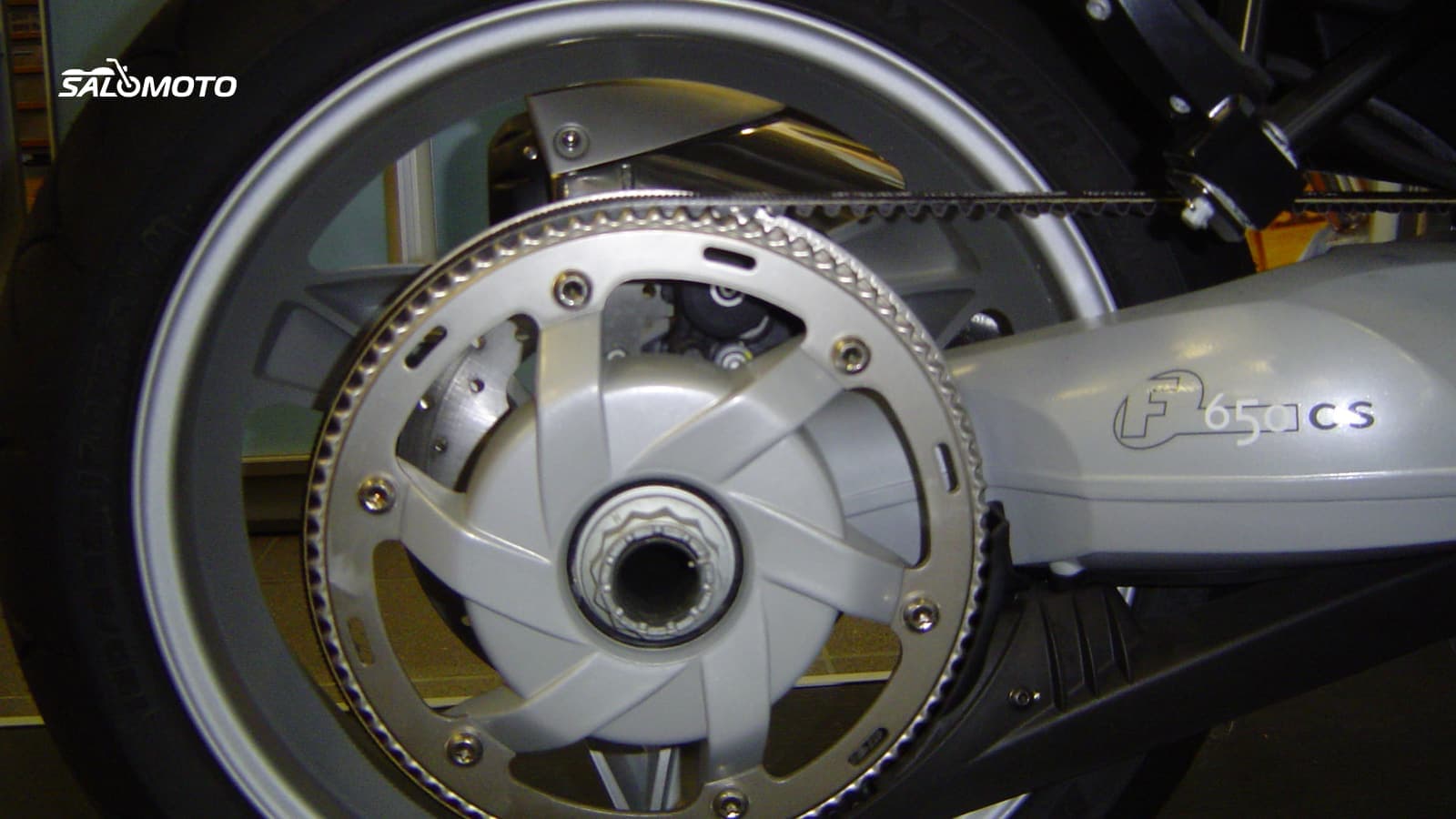
All three carry power from the transmission to the rear wheel; they just do it differently. A chain runs in the open over a small front sprocket and a large rear sprocket, like a bicycle chain built for far more torque. A belt works on the same principle, but a toothed, reinforced rubber belt runs on pulleys instead of a metal chain on sprockets. A shaft spins inside a sealed tube, usually built into the swingarm, and a set of angled gears at the rear wheel turns the power 90 degrees. Those gears run in oil and cost a little power.
Chains are the most common setup, from small commuters to sportbikes. Belts show up mostly on cruisers and some touring models, and shafts are common on large touring and adventure bikes.
Chain vs. belt vs. shaft at a glance
| What matters | Chain | Belt | Shaft |
|---|---|---|---|
| Routine care | clean, lube, adjust slack | no lube, regular visual check | gear oil on schedule |
| Mess | lube fling on the rear wheel | clean | clean, fully enclosed |
| Weight | light | light to moderate | heaviest |
| Replacement | chain and sprockets cheap, more often | costlier, swingarm often comes off | rare, but repairs are costly |
| Changing gearing | easy, swap a sprocket | rare, few options | not practical |
What that means on the road: touring and high mileage favor a shaft or belt, because there's no chain to tend at every gas stop. Commuting works with all three, though if you ride daily in all weather, chain care is what you'll notice most. Off-road is chain territory: it's light and forgiving of dirt and rocks that can hurt a belt. Sporty riding usually means a chain too, for low weight, direct feel and gearing you can tune.
For the dollars-and-cents side, run your candidates through the worksheet in cheapest motorcycles to own.
Which drive fits which rider
- You ride year-round, including rain and road salt: salt and brine are hard on chains, which then need cleaning and lube far more often. A shaft or belt takes that chore off your winter list. More on cold-weather bikes in riding all year.
- You cover long distances with luggage: a shaft keeps going day after day without chain spray or slack checks, and the extra weight matters less on an already heavy touring bike. See motorcycles for travel with luggage and sport touring bikes.
- You ride off-road: go with a chain. It's light, tough in the dirt and repairable on the trail. Some big adventure bikes use a shaft, but they lean toward gravel roads rather than technical terrain; compare in adventure bikes and off-road motorcycles.
- You want to wrench as little as possible: shaft or belt. Neither is maintenance-free: a shaft needs gear oil changes on schedule, a belt needs regular inspection.
- You ride for fun on twisty roads: a chain usually fits best. It keeps weight down, and a different sprocket lets you tailor the gearing to your roads.
Buying used: what to check on the drive
The general used-bike checklist lives in used motorcycles under $3,000. For the drive, add these:
- Chain: if you can pull it noticeably away from the rear sprocket, it's worn.
- Sprockets: pointed, hooked teeth that look like shark fins mean the whole set is due.
- Chain condition: turn the wheel and look for tight and loose spots, stiff links and damaged O-rings.
- Belt: cracks, frayed edges, missing or chipped teeth, and rocks pressed into the belt or pulley.
- Shaft housing: oil around the rear drive is a warning sign; oil on the tire or brake disc is a safety problem.
- Shaft in use: take grinding or clunking on takeoff or on and off the throttle seriously, and have a shop check for play.
- Records: receipts for chain kits, belts or final-drive oil show whether the owner followed the manufacturer's maintenance schedule.
Service intervals are set per model in the owner's manual, not by forum rules of thumb.
The drive is one factor, not the whole decision
Hardly anyone should buy a motorcycle for its final drive alone. Seat height, weight, riding position, power and how you'll actually ride matter more almost every time. And the manufacturer has often made the call already: light standards, sportbikes and dual-sports mostly use chains, many big touring bikes use shafts, and belts are found mostly on cruisers. Fall for a cruiser, and the drive usually comes with it.
So work in this order: first find the type of bike that fits your body and your roads. Then compare within that class, and that's where the drive can tip the scales, say between two similar touring bikes when you have zero interest in chain care.