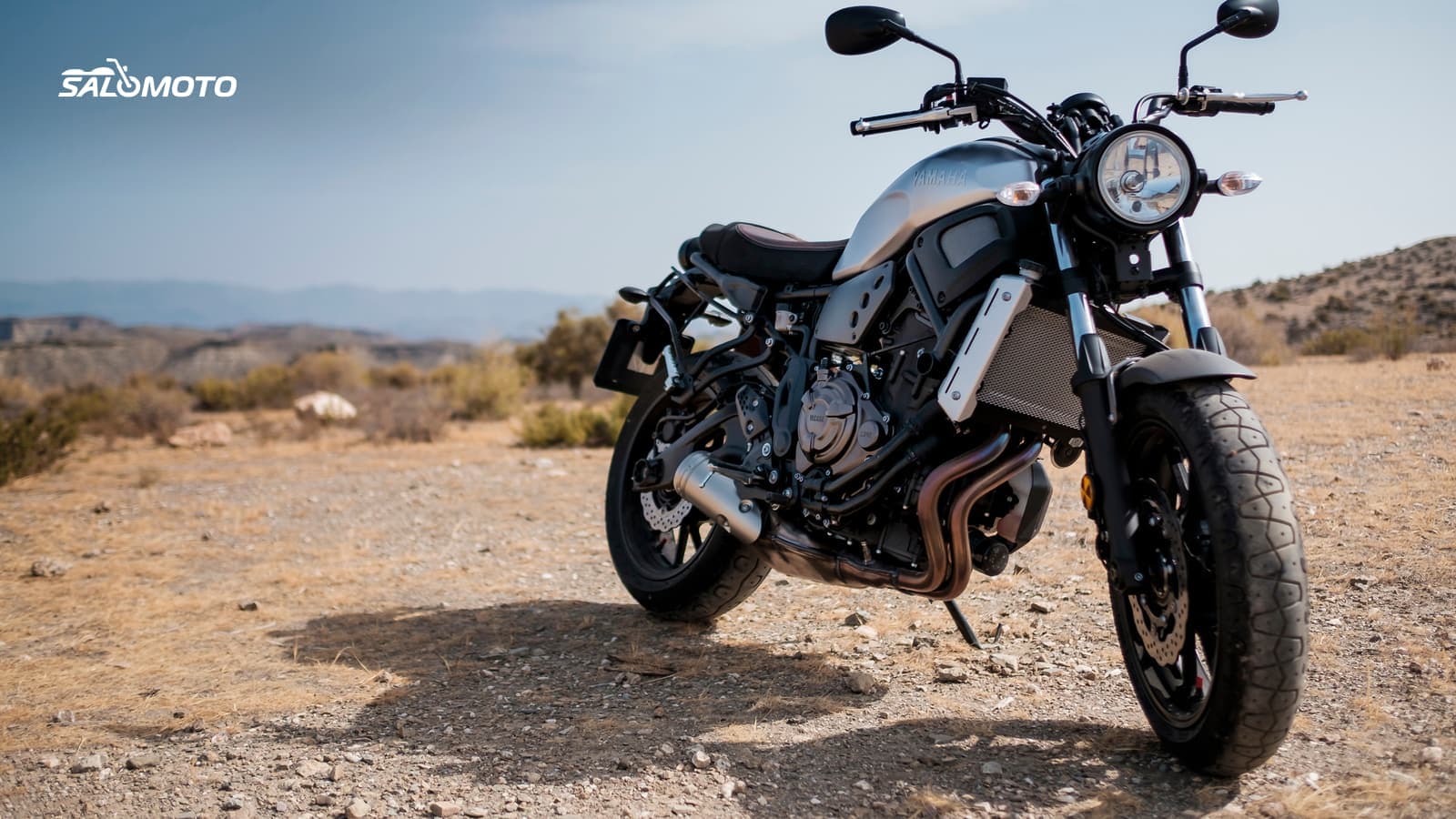
Why a naked bike changes how you plan
A naked bike, or standard, has no fairing to push the air around you. Your upper body is the windbreak. On a winding two-lane road that's part of the appeal: you sit upright, see everything and feel the bike. The trouble starts when the speed stays high for a long time. Aerodynamic drag doesn't rise in step with speed; it rises much faster. A little more speed means noticeably more push on your chest, arms and neck.
That flips the usual planning logic. Miles aren't what wear you out on a naked bike; minutes in strong wind are. Two hours of twisty back roads at a varied pace can feel easier than one hour on the interstate. Once you see it that way, you plan around a personal wind budget instead of a mileage target.
Pick roads by wind load, not just by speed
The road type decides how hard the wind works on you. Use this as a starting point:
| Road type | Wind load on a naked bike | How to use it in your plan |
|---|---|---|
| Twisty two-lane back road | low to moderate | the heart of the trip |
| Fast US or state highway | moderate, high on long straights | connectors, in doses |
| Interstate | high and constant | short transfers only, then a break |
| Open plains and bridges | crosswind exposure | check the wind, plan an alternative |
A pattern that works for longer trips: get to the good roads as directly as you can, ride the good roads at a relaxed pace, and use interstate only where it saves real time. For routing around fast roads on purpose, see routes that avoid highways.
Watch for open, exposed stretches while you plan: high plains, causeways, long bridges. Crosswinds and the bow wave from passing semis hit an unfaired rider harder than someone tucked behind a touring screen.
Set legs and breaks by your wind budget
How far you ride in a day is mostly about you. The general approach is in how far to ride in a day. A naked bike adds a few steps of its own:
- Find your wind limit: Ride a familiar loop that includes some interstate and note how many minutes pass before your neck or shoulders start to complain. That's your limit for fast stretches.
- Chop up the slab: Split unavoidable interstate miles into pieces shorter than that limit, with a stop at a rest area or an exit in between.
- Stop before you're tired: On a naked bike fatigue creeps in quietly. Schedule the first break before you think you need it.
- Ride your own pace: If friends are on faired tourers, tell them your cruising speed before you leave. Everyone rides at the speed that's safe for them.
- Save energy for the afternoon: The second half of the day is usually harder without wind protection. Put the best curves in the morning.
Compared with a sportbike, the strain moves around: there your wrists carry your weight, here the wind loads your upper body. How that changes the plan is covered in sportbike touring routes.
Gear and luggage that stretch your range
Small changes can move your wind limit a long way:
- Helmet and fit: A well-fitting full-face helmet and riding gear that doesn't flap save a surprising amount of energy. A loose jacket works like a sail.
- Earplugs: Wind noise is tiring in itself, fairing or not. Many long-distance riders wear them.
- Flyscreen: A small screen can take a lot of pressure off your chest. Only a test ride tells you whether it works for your height.
- Luggage: A tank bag and a low tail bag keep the weight down. A tall dry bag stacked on the passenger seat catches extra wind.
- Seat: Many naked bikes come with seats built for short blasts. If your backside gives up before your neck does, that's the next upgrade.
Still deciding whether a naked bike suits the riding you do? The Bike Match guide to the naked bike covers that choice.
Planning a ride in Germany with Salomoto
Salomoto doesn't plan routes in the US: the Salomoto route planner covers routes within Germany, free and without an account. If you're riding there, set a start, destination and stops, choose the curvy or very curvy profile and avoid highways (the Autobahn), which also leaves out the German expressways known as Kraftfahrstraßen. You'll see the distance, an elevation profile and an estimated riding time without breaks, so add your wind stops yourself. Salomoto doesn't know your bike and shows no weather, so it can't warn you about wind either. Download the finished route as a GPX file and load it onto your GPS unit or phone app.
With a free account, you can log the ride afterward in RoadDex, Salomoto's ride log. You enter the date, bike, distance and duration yourself; RoadDex records no GPS. Over a season, those entries give you honest numbers for how long your legs on a naked bike can be.