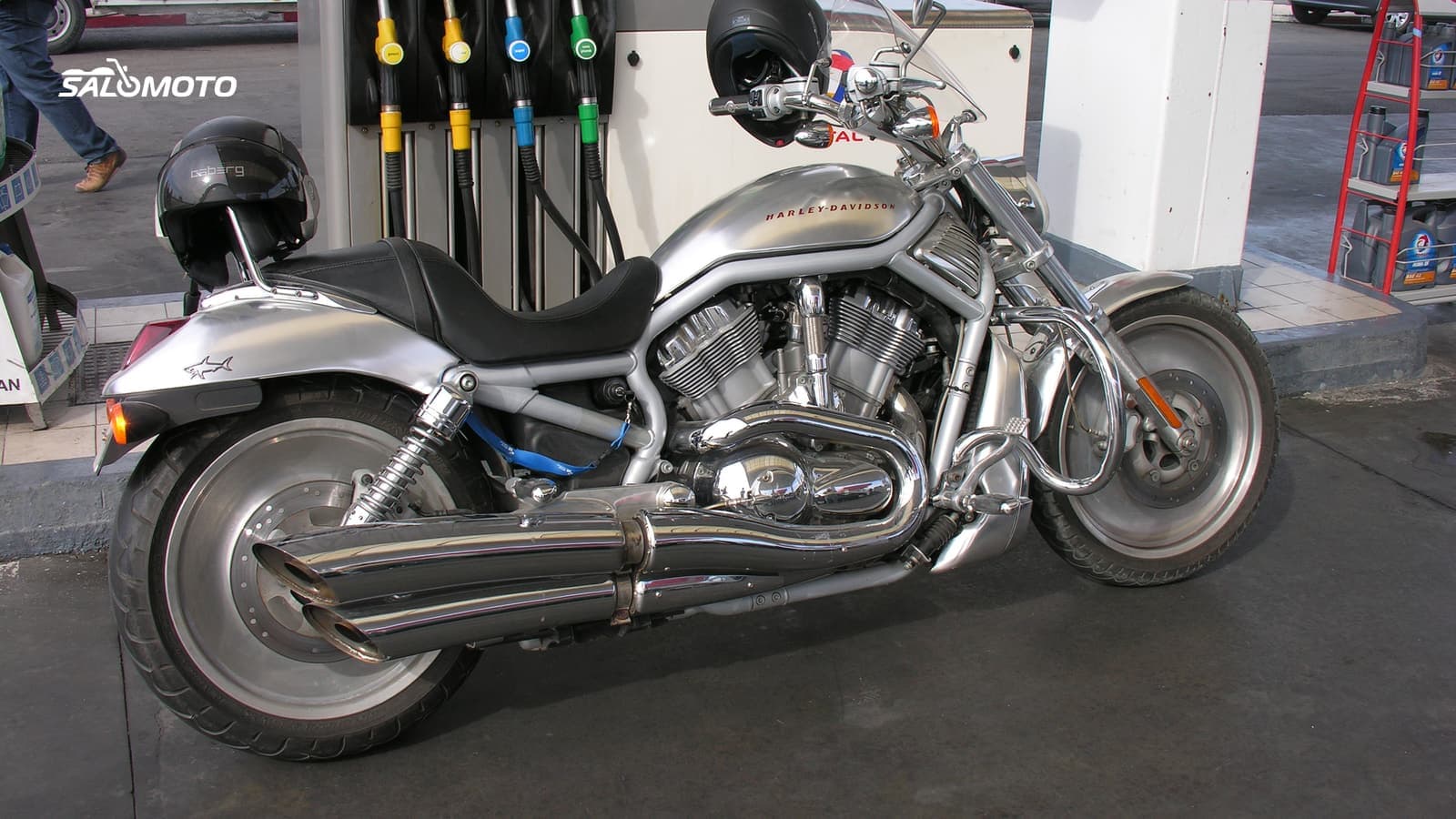
Find your real range
The range in a review or the spec sheet is a starting point. What counts is how far your bike goes with you, your gear and your pace. The easy way to find out: fill up, reset the trip meter, and at the next fill-up note the miles and the gallons you pumped. After two or three tanks on different kinds of roads, you know your real mileage.
What eats into range on a trip:
- saddlebags, a top case and a passenger, meaning more weight and more drag
- long stretches at interstate speed into a headwind
- mountain roads with lots of climbing and hard acceleration
- cold mornings and short hops with a cold engine
Take your measured range, subtract a generous reserve, and you have your planning range. From now on the low-fuel light isn't your cue to start looking for gas. It's a sign the plan already went wrong.
Spot the long gaps
In towns and along busy highways, gas is rarely far away. The trouble spots are the roads you came for: remote valleys, national forest routes, high plateaus and long two-lanes through ranch country. Parts of the West have stretches where stations are far apart, and small-town stations often close in the evening or on Sundays.
How to find the gaps before you leave:
- Lock in your route and look at a map for gas stations along it.
- Flag every stretch where the distance between two stations comes close to your planning range.
- Set a fixed gas stop before each of those stretches and fill up there, even with plenty left.
- Note a backup station nearby for every planned stop.
Heading into the mountains needs extra care, see mountain motorcycle trips. If you ride electric, charging works differently: electric motorcycle trip planning.
Check hours and how you'll pay
A pin on the map doesn't help if the station closed at six. Small rural stations keep shorter hours, some close on Sundays, and at others only the pumps work after hours, and only with certain cards.
| Question | Why it matters |
|---|---|
| Open on your day, at the time you'll get there? | most rides happen on weekends |
| Pumps work after hours? | your fallback when the store is closed |
| Which cards does the pump take? | ZIP code and PIN prompts trip up some cards |
| Does it sell the grade your bike needs? | not every small station has premium |
| Room to maneuver on level ground? | a loaded bike on a sloped gravel apron is no fun |
Gas price apps and map apps list stations and often their hours, but hours can be out of date. For the one station a remote leg depends on, check its own listing or call. Watch the pump labels too: the EPA lists motorcycles among the vehicles that cannot use E15, and some pumps sell it under a brand name.
Plan a fuel window, not a pinpoint
Don't plan toward one single station. Plan a fuel window: a section of the route where you'll fill up and where you know two options. If the first one is closed or packed, you ride on calmly to the second. The window starts well before your planning range runs out.
A gas stop is also a good break. You're stopping anyway, so drink some water, stretch and check your chain. How to combine gas, coffee and scenic stops is covered in coffee and scenic stops. In a group, everyone fills up at every stop, even riders with fuel to spare, because the bike with the shortest range sets the pace for all. The full picture of stop types is in planning stops on a ride, and ordering waypoints is explained in routes with several stops.
Salomoto today: The Salomoto route planner does not show gas stations, fuel prices or opening hours. You pick the place where you'll fill up yourself and add it as a stop on your route, no account needed, for routes in Germany. You see the route's distance and estimated riding time right away, and a free account lets you save it. The GPX download includes the stop as a waypoint.
When it gets tight anyway
If the low-fuel light comes on sooner than planned, stay calm and ride smoothly: gentle throttle, lower revs, steady speed. Don't wander down side roads hoping for a station. Head for the nearest one you know about or can see on the map. Never start a long empty highway stretch on reserve; a shoulder is a dangerous place to wait for help.
If the engine does quit, roll as far off the road as you safely can, make yourself visible and call for help. On the next trip you'll know your planning range is shorter than you thought.
Legal information on this page refers to the United States, where rules vary by state.