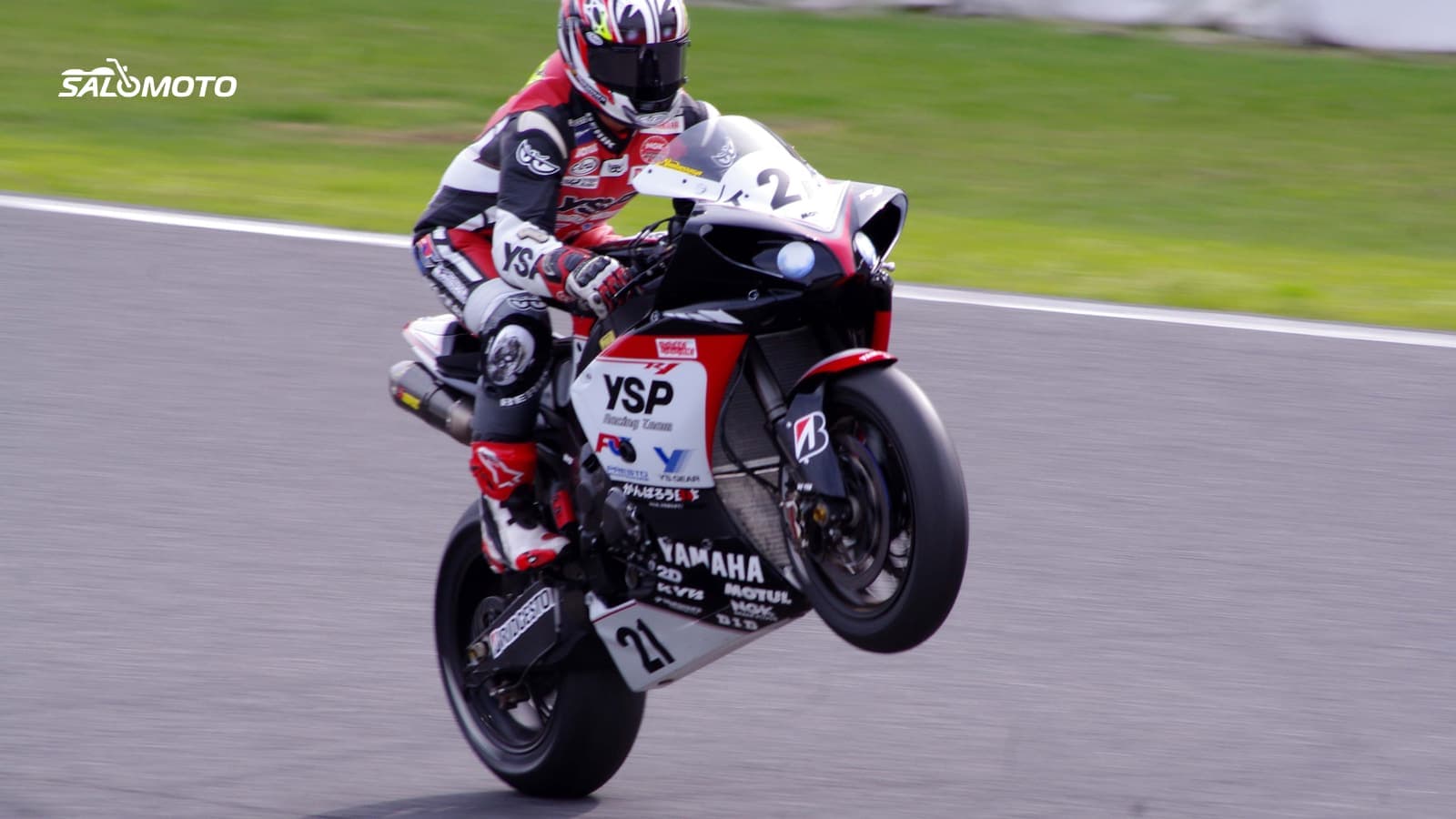
On the street: illegal and dangerous
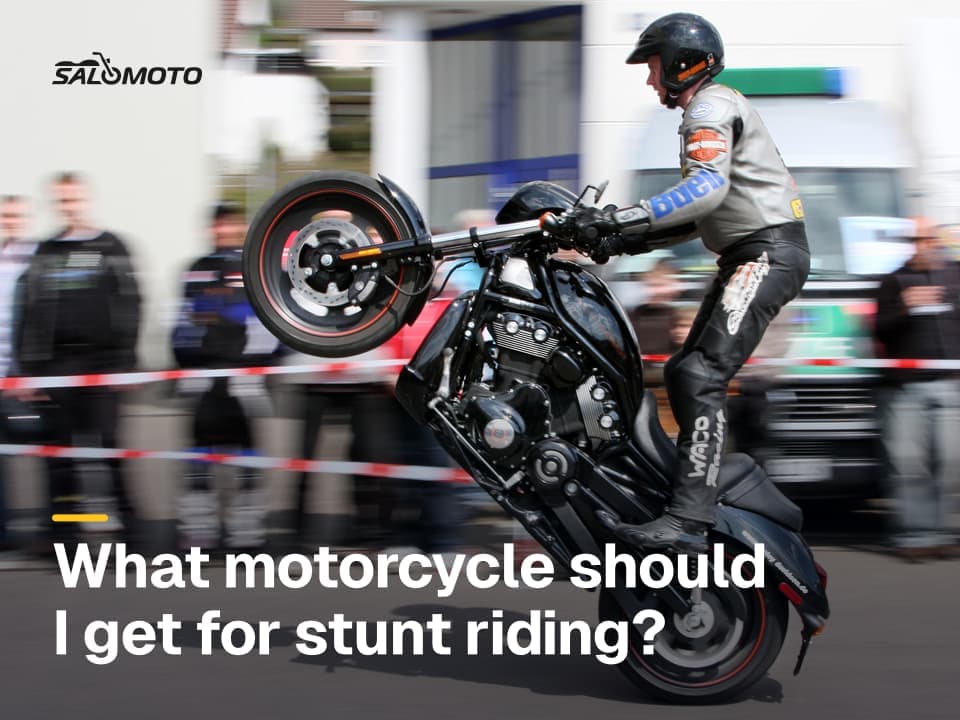
A wheelie on a public road isn't a harmless bit of fun. It puts you, your license and other people at risk. Rules vary by state, and there's usually no statute that says "wheelie." Instead, stunting on public roads is typically charged as reckless driving, and some states also use exhibition-of-speed or sideshow laws. Two examples: California Vehicle Code § 23103 defines reckless driving as driving with "willful or wanton disregard for the safety of persons or property," and § 23109 covers speed contests, exhibitions of speed and sideshows. Check your own state's DMV and vehicle code; how a specific case is charged depends on what happened.
Then there's the physics. A bike with its front wheel in the air steers and stops worse than one with both tires on the ground. Traffic, intersections, curbs, gravel and people who don't expect you leave no room for that, not even "just for a second" on an empty back road.
Where wheelie training happens
Wheelies are taught on ground that's closed to traffic: kart tracks, motorsport parks, training facilities or private lots an organizer has permission to use. Specialist wheelie and stunt schools run these classes, and some motorcycle events offer sessions too. Private land isn't automatically fine: you need the owner's permission, and local noise rules still apply. A trail or a vacant parking lot that's open to the public is not a practice area; where off-road riding is legal is covered in riding off-road: where and on what.
Before you book, ask the school:
- Where does the class run, and is the area closed off during it?
- Who instructs, and how many students does each instructor handle?
- Do you provide bikes, and are they set up so they can't flip over?
- What protective gear is required, and what can I rent?
- What are the requirements: minimum age, license, experience?
- Who's liable for damage, what insurance do you carry, and what's in the waiver?
A good school answers all of this without hesitating and tells you up front how the day will run.
What makes a bike good for training
School bike or your own, a few principles matter more than the brand or the horsepower figure:
| What to look for | Why it matters |
|---|---|
| Low weight | easier to hold, pick up and push around |
| Smooth, predictable power | surprises are exactly what you don't need here |
| Rear brake you can reach | it has to be within easy reach at all times |
| Tough build | frame sliders, hand guards, folding levers, a skid plate |
| Cheap to crash | parts are easy to find and don't cost a fortune |
| Anti-flip protection | some schools use bikes with a wheelie bar or a similar limit |
More power doesn't make learning easier; it just shrinks your margin for mistakes. That's why a small, light bike is almost always the better start than a big, fast one. Some classes use pit bikes, small supermotos or light standards. For what a supermoto is like on a kart track and on the street, see is a supermoto right for you.
Protective gear and insurance
Street helmet laws vary by state, but at a training class the organizer's rules apply, and they're usually strict. The sensible kit:
- A full-face, DOT-compliant helmet that fits snugly
- Leathers or a sturdy textile suit with armor at shoulders, elbows, hips and knees
- A back protector
- Motorcycle boots with ankle protection
- Gloves with knuckle and palm protection
On insurance, assume nothing. Motorcycle policies are written for the street, and closed-course events may be excluded or only partly covered. Before the class, ask your insurer in writing what applies to damage to your bike, to your injuries and to damage you cause to others, and check your health plan too. If you ride the school's bike, find out whether and up to what amount you're responsible for damage to it. For the basics of covering a bike, see motorcycle insurance.
School bike, second bike or daily rider?
| Your situation | A sensible path |
|---|---|
| You want to try it once | a class on the school's bike with rental gear |
| You train regularly at supervised sessions | your own light, tough second bike that can take tip-overs |
| Your only bike is your daily commuter | learn on the school's bike first; keep your commuter intact |
| You want tricks beyond wheelies | a stunt motorcycle and a stunt school |
| Your child wants to copy wheelies | supervised club training, see dirt bikes for kids |
If you train on your own bike, have it checked first: brakes, tires, chain, clutch and cooling all work harder in training than in everyday riding. Look it over again before it goes back to commuting duty. And when the class is over, the front wheel stays down on the ride home.
Legal information on this page refers to the United States, where rules vary by state.