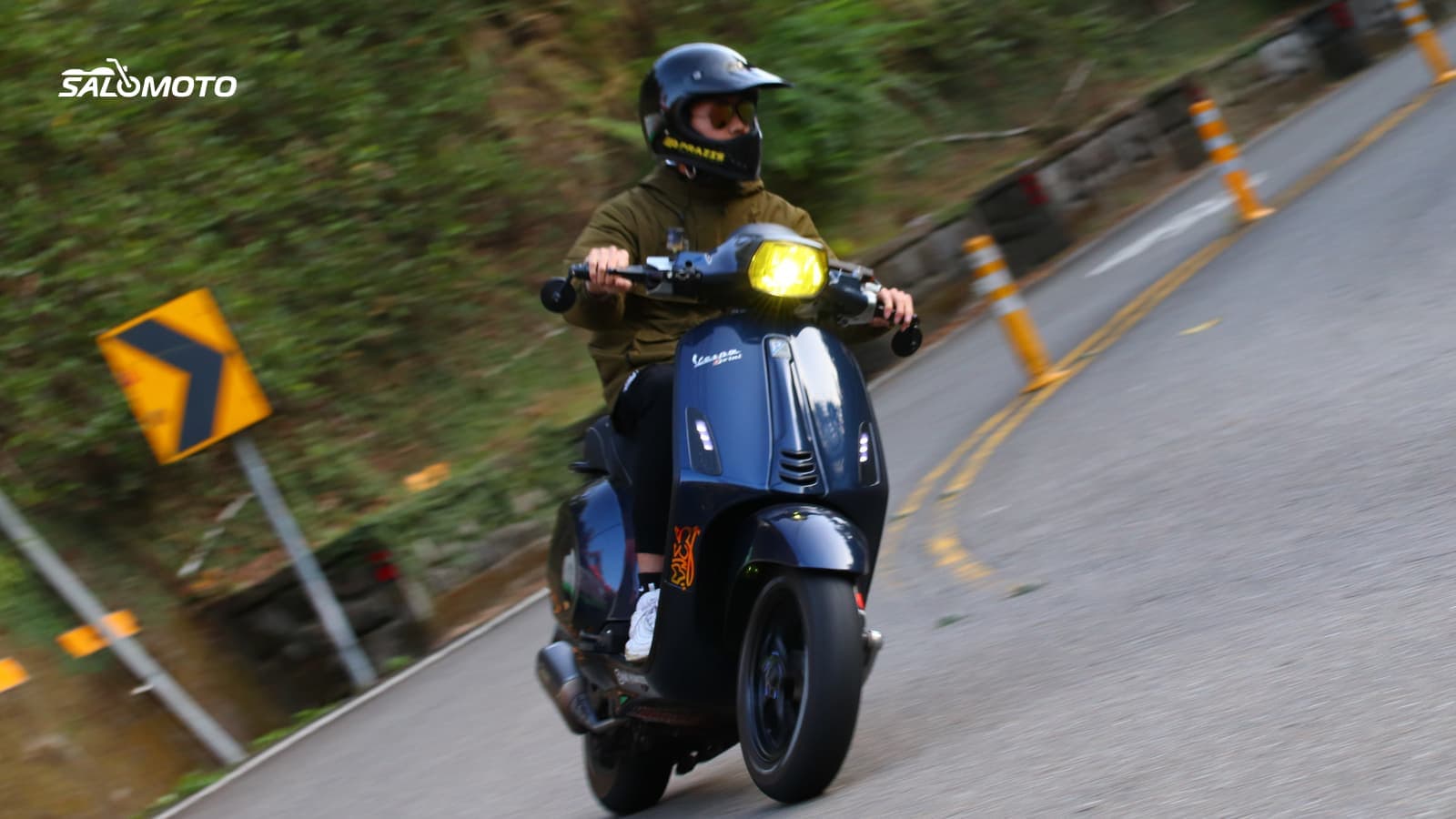
What makes a Vespa ride different
On a Vespa you don't ride to cover distance. You ride to be out there: through small towns, along a river, with coffee halfway. That changes the planning. The best route isn't the fastest or the twistiest; it's the one where you sit comfortably, deal with little traffic and can stop somewhere nice.
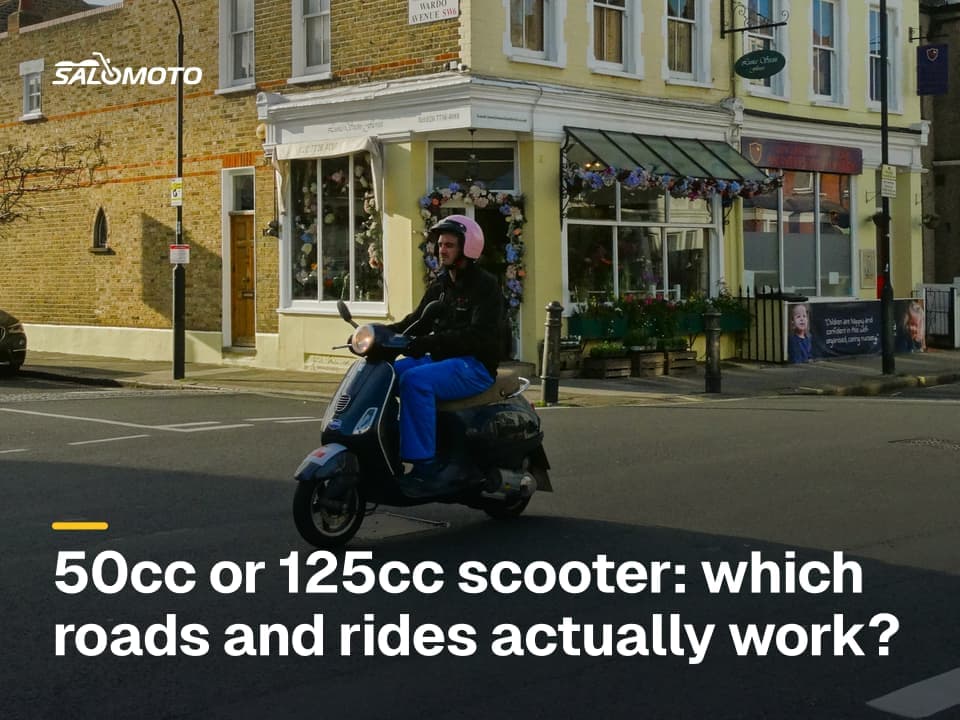
The vehicle adds a few quirks. Vespas and similar scooters have small wheels and short suspension travel, which feel great on smooth asphalt and get busy over potholes and gravel. You sit upright with very little wind protection. And depending on the model, there's a moped-class engine, a 125 or something much stronger underneath. Which roads each class may use is covered in 50cc vs. 125cc scooter rides. Picking the right Vespa is the subject of which Vespa.
The right roads for a Vespa
Good Vespa roads share three things: good pavement, light traffic and something to look at. What to look for while planning:
- Pavement: smooth asphalt over long patched or brick sections; skip gravel.
- Traffic: county roads and residential streets over busy arterials full of trucks.
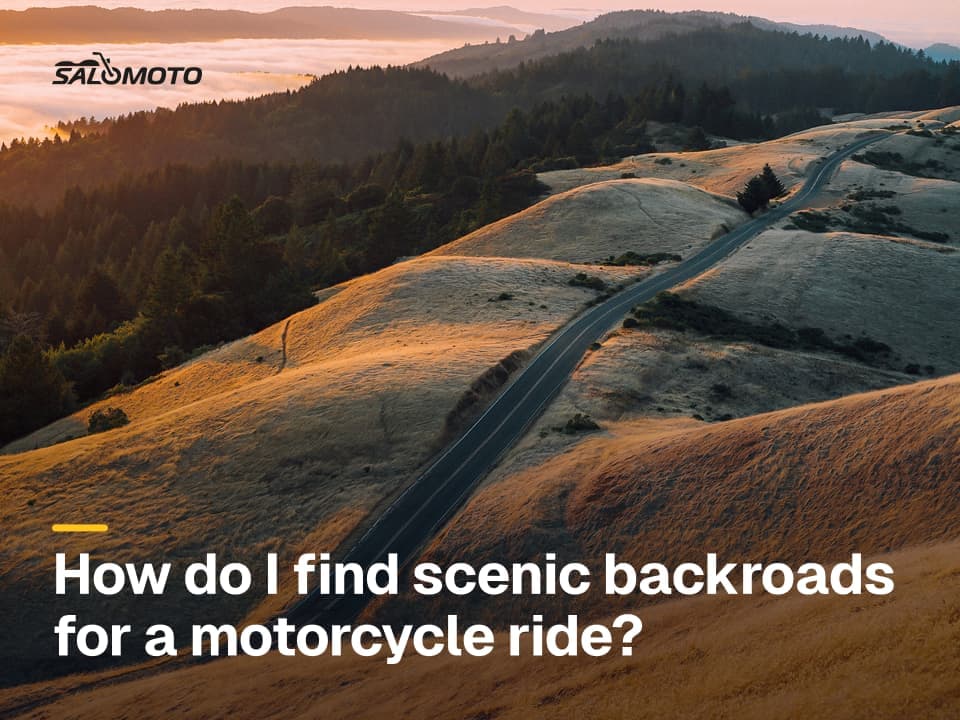
- Scenery: river valleys, lakes, farm country, small towns with a main street. For ideas, see finding scenic back roads.
- Elevation: flat to gently rolling; long grades slow small engines, especially two-up.
- Loops: a ride that comes back to the start by a different road beats an out-and-back on the same one.
Planning legs and stops
Think in riding hours, not miles. A leg of about an hour suits most people on a scooter, and a break feels good after that. Plan the stops up front instead of hunting for a spot on the road:
| Stop | Good for | Watch for |
|---|---|---|
| Café or bakery | coffee, restroom, warming up | opening hours, scooter parking |
| Scenic overlook | photos, a short rest | stop only in pullouts or parking areas |
| Town square | lunch, a stroll | local parking rules |
| Gas station | fuel, a drink | fill up early, small tanks |
Stop only where parking is legal and safe: never in a curve, never on the shoulder of a fast road. To spread café and overlook breaks sensibly across the day, read café and scenic stops.
A typical half-day loop comes together like this:
- Pick a destination: a café, a lake or an overlook about an hour away.
- Choose the way out: the quietest connection, ideally along a river or through small towns.
- Come back another way: a second road home, so you don't ride the same stretch twice.
- Check the elevation: if there's a long climb, ask whether your scooter handles it two-up or loaded, or pick a flatter option.
- Add a buffer: for photo stops, detours and one more break than you expect.
Packing, weather and riding in a group
Space is tight on a Vespa. Under the seat there's usually room for a helmet or rain gear; for more, you need a top case or a rack. Pack with purpose: rain gear, water, a lock and a phone charging cable. With so little wind protection you feel cold, rain and heat directly, so check the forecast before you go and plan a shorter loop with places to shelter when it looks unsettled.
Vespa group rides are popular and often mix models. The route then follows the scooter with the lowest top speed and the most road restrictions. Set regroup points so nobody has to rush, and agree beforehand on who leads and where the group waits. Every rider stays responsible for their own riding.
Planning a Vespa loop in Germany with Salomoto
Salomoto doesn't plan routes in the US: the Salomoto route planner covers routes within Germany, free and without an account. For a Vespa loop there, add your start and breaks as stops, close the route back to the start by hand and avoid motorways, which also leaves out German expressways. There's no scooter profile, and the estimated riding time leaves out breaks and doesn't assume a 45 km/h (28 mph) top speed. Salomoto doesn't show cafés, gas stations or weather. Download the finished loop as a GPX file for your phone. With a free account you can save it and share it with your group, then log the ride with photos in RoadDex, a logbook that records no GPS.